Choosing Heavy-Duty Drones for global procurement requires more than comparing payload figures and flight times. A specification sheet cannot show how a platform behaves beside a windy container yard, on a steep construction site, or during a winter inspection. Procurement teams should examine payload capacity, endurance under real loads, weather resistance, battery-cycle performance, navigation redundancy, and maintenance access. Small details matter. A sealed battery compartment can reduce downtime. A modular payload bay can protect future investment.
Romeo Durscher, a respected drone technology executive and industry educator, has often emphasized, “The drone is not the product; the data is the product.” This principle remains valuable when evaluating Heavy-Duty Drones. A capable aircraft is only one part of the system. Buyers should also assess sensor compatibility, data governance, cybersecurity controls, operator training, software support, and regional service availability. Compliance with aviation, radio, privacy, import, and workplace regulations must guide every purchasing decision.
Global procurement also exposes weaknesses that brochures rarely mention. A low purchase price may hide expensive batteries, limited spare parts, or slow technical support. A powerful aircraft may be excessive for routine mapping. Conversely, an undersized platform can struggle when wind, tools, or thermal cameras are added. There is no universal winner. That is inconvenient, but realistic. Teams should request demonstrations, inspect documented flight logs, and test the aircraft with their intended payload. Even then, decisions can be imperfect. Conditions change, suppliers evolve, and field experience may challenge the original spreadsheet. Reliable procurement leaves room for review, measured pilot projects, and responsible scaling.
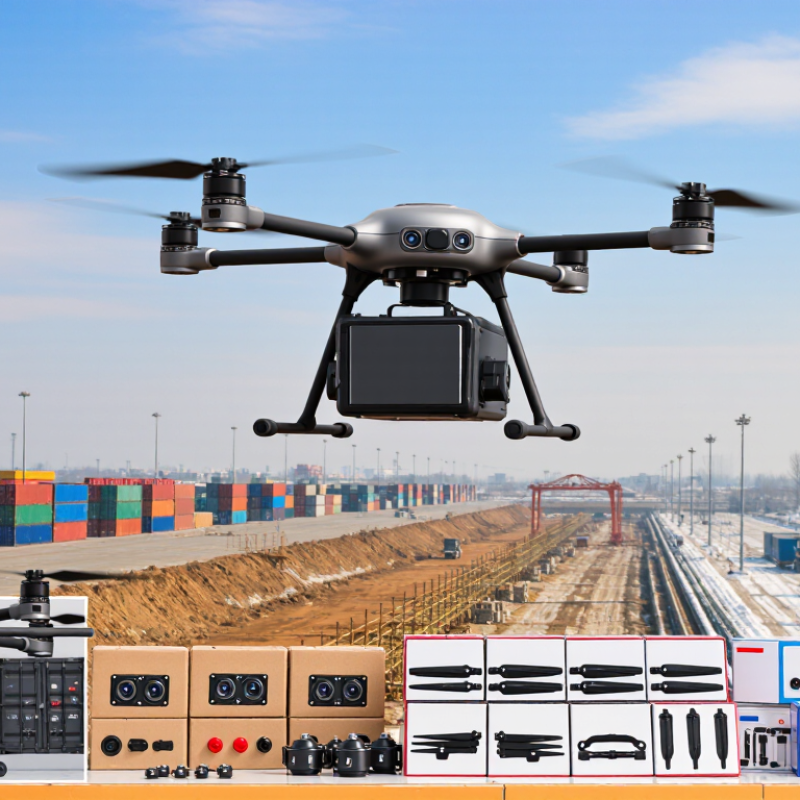
Define the job before selecting a heavy-duty drone. Specify payload, flight time, operating altitude, wind tolerance, temperature range, and daily sortie volume. A 15-kilogram payload means little without battery endurance and landing-site limits. Procurement teams should document whether the drone will carry cameras, sensors, or delivery equipment.
Market evidence supports disciplined planning. Drone Industry Insights’ Global Drone Market Report 2024 projects the global drone market to exceed US$50 billion by 2030. The report highlights inspection, mapping, and infrastructure services as important growth areas.
The FAA’s 2024 Aerospace Forecast also recorded more than 860,000 registered civil drones in the United States. These figures suggest expanding demand, but they do not prove that larger aircraft deliver better value.
Start with measurable objectives. Set minimum flight endurance under realistic payloads, not laboratory conditions. Test performance with cold batteries, coastal wind, dust, and uneven ground. Small details matter. Define spare-part availability, operator training, encrypted data handling, and maintenance intervals across every target country. Total cost should include batteries, software, insurance, transport, and technical support.
Do not over-specify. A heavier frame may increase endurance requirements and reduce useful payload. Our early procurement assumptions often favor maximum capacity, although many missions need less. That choice deserves review. Pilot demonstrations should compare mission completion rate, image quality, recovery time, and five-year operating cost. Independent test records and supplier documentation should support each requirement.
Heavy-duty drones should be selected by mission data, not impressive specifications. Grand View Research valued the global commercial drone market at approximately USD 30.6 billion in 2022. That growth increases procurement pressure, but larger airframes do not automatically deliver better field performance.
Payload must be measured at the required flight time, not at maximum lift. A drone carrying 20 kilograms may lose substantial endurance after batteries, safety margins, and weather protection are added. Ask for payload curves at 80% battery reserve.
Range also needs careful interpretation. A listed 15-kilometer control range may fall sharply near buildings, forests, or radio interference. The FAA Aerospace Forecast 2024–2044 identifies continued expansion in commercial unmanned aircraft operations, making reliable command links increasingly important. Dual navigation, return-to-home logic, and encrypted communications deserve more attention than headline distance.
Endurance should be tested with the actual camera, cargo box, and temperature conditions. Wind resistance matters on exposed rooftops. Cold weather can reduce battery output before the mission begins. Look for IP-rated protection, replaceable batteries, obstacle sensing, and landing accuracy within a few meters. Operating capability includes deployment time, operator workload, maintenance access, and documented training. A 45-minute claim may become 31 minutes in real work.
I have seen procurement teams overlook this gap. That mistake is costly. Mission trials should include repeated flights, partial payloads, signal interruptions, and imperfect landing surfaces. Safety and local aviation approval must remain part of the purchasing decision.
Choosing heavy duty drones for global procurement requires more than payload capacity. Safety systems deserve practical testing, not brochure promises. Look for redundant flight controls, dual navigation sources, obstacle detection, and controlled emergency landing functions. A strong system should remain predictable after signal loss or sensor failure. Test these features with trained operators in realistic weather. Confidence grows from evidence.
Regulations vary by country and operating environment. Verify airspace permissions, pilot qualifications, remote identification rules, data handling, and maintenance obligations before purchasing. Ask suppliers for clear technical files, conformity records, software update procedures, and incident reporting processes. Local aviation authorities should confirm the intended operation. Regulations change. Procurement teams must track them continuously.
Tips: Compare complete operating costs, not only the purchase price. Measure battery life under full load, charging time, noise near communities, and performance in wind or rain. Check whether batteries can be repaired, reused, or responsibly recycled. A lighter aircraft may reduce energy use, but a stronger frame might last longer. This trade-off is easy to overlook. I have seen specifications appear impressive until temperature, dust, and service delays exposed weaknesses. Leave room for field trials, independent inspections, and operator feedback before making a large commitment.
Evaluate safety systems, regulations, and environmental performance before selecting an aircraft for international operations.
How to read this chart: The comparison shows the maximum aircraft mass and standard operating altitude limits under selected baseline aviation frameworks. The United States uses a 55 lb limit under FAA Part 107, while the European Union, United Kingdom, and Australia generally use a 25 kg threshold for comparable low-risk operating categories. Heavy-duty systems above these limits may require additional approvals, operational risk assessments, or certification.
Procurement checklist: Confirm independent flight-control and power redundancy, reliable command-and-control links, geofencing and return-to-home functions, detect-and-avoid capability, operator training requirements, battery transport compliance, noise performance, repairability, and battery end-of-life recycling procedures in every target market.
Reference frameworks: FAA Part 107, EASA Open Category, UK CAA Open Category, and CASA Australian excluded-category operating conditions. Regulatory requirements vary by operation, location, aircraft configuration, and risk level.
Choosing a heavy duty drone for global procurement requires more than comparing flight time and payload figures. Assess the supplier’s production history, quality controls, and service coverage in your operating regions. Request traceable component records, documented test procedures, and sample maintenance reports. A factory visit or live demonstration can reveal details that brochures often hide. Check lawful operation, export requirements, pilot training, and data protection before signing any contract.
Customization should solve a measured field problem. Useful options may include weather-resistant housings, interchangeable payload mounts, extended battery systems, and secure communication modules. Confirm how modifications affect weight, endurance, warranty coverage, and spare-part availability. Ask whether the supplier can provide firmware updates and technical training for your teams. Custom work can improve performance. It can also create dependency. That risk deserves attention.
Tips: Build a five-year ownership model. Include purchase price, batteries, charging equipment, software, training, insurance, repairs, import duties, and planned downtime. Compare expected service intervals, not only warranty periods. Ask for a clear response-time commitment. Test one unit in realistic wind, temperature, and dust conditions before scaling procurement. One overlooked cost is enough. A cheaper platform may become expensive when local technicians, replacement parts, or specialized tools are unavailable. Recheck every assumption with operating data, because early estimates are often too optimistic.
Indicative procurement benchmark for industrial unmanned aircraft systems; figures are generic planning ranges and should be validated through technical proposals and flight trials.
| Evaluation Area | Procurement Dimension | Indicative Benchmark | Suggested Weight | Validation Criteria |
|---|---|---|---|---|
| Mission Fit | Maximum take-off mass | Typically 25–150 kg for heavy-duty industrial platforms | 5% | Confirm local aircraft classification, transport requirements, and operating permits. |
| Useful payload | 5–40 kg, depending on airframe size and battery configuration | 10% | Test payload at the required altitude, temperature, wind speed, and flight duration. | |
| Endurance under rated payload | 30–90 minutes for battery-powered systems; longer with hybrid systems | 10% | Require flight logs showing usable reserve, not only no-load maximum endurance. | |
| Weather and environmental tolerance | Target IP45–IP55 protection; operating temperature commonly −20°C to +50°C | 5% | Request ingress-protection evidence, wind limits, corrosion protection, and cold-weather battery data. | |
| Redundancy and fail-safe behavior | Redundant power, navigation, communications, and controlled return-to-home functions | 10% | Review failure-mode tests, emergency procedures, geofencing, and lost-link performance. | |
| Supplier Capability | Quality-management maturity | Documented production controls, traceability, inspection records, and corrective-action process | 8% | Audit manufacturing, calibration, incoming inspection, serial-number tracking, and change control. |
| Certification and regulatory support | Complete technical files, declarations, manuals, and country-specific documentation | 8% | Check whether the supplier supports registration, import clearance, remote identification, and operator compliance. | |
| After-sales service and spare parts | Critical parts availability for at least 5 years; response target within 1–2 business days | 7% | Evaluate regional repair capability, replacement lead times, warranty terms, and training coverage. | |
| Supply continuity and export readiness | Dual-source critical components and documented export-control screening | 5% | Request production capacity, lead-time history, business-continuity plans, and customs documentation. | |
| Customization | Payload integration | Mechanical mounting, power output, data interface, and vibration-isolation options | 7% | Verify payload mass, center of gravity, power draw, thermal load, and software compatibility. |
| Communications and cybersecurity | Encrypted command links, configurable frequencies, authenticated firmware, and access controls | 7% | Assess encryption, update policy, data residency, vulnerability response, and offline operating capability. | |
| Software and fleet-management integration | Documented API or standard data export; centralized maintenance and flight-log management | 5% | Run an integration test with mission planning, telemetry, asset tracking, and reporting workflows. | |
| Localization and operator training | Localized manuals, maintenance procedures, instructor training, and multilingual support | 3% | Confirm training hours, competency records, translated documents, and local service contacts. | |
| Total Ownership Cost | Initial aircraft and ground equipment | Approximately USD 25,000–250,000 per complete aircraft system | Included in TCO | Include aircraft, controller, batteries, charger, payload adapters, cases, software, and commissioning. |
| Battery and consumables | Battery replacement commonly required after 300–800 equivalent cycles, depending on chemistry and usage | 15% of TCO | Model cycles per year, storage conditions, charging infrastructure, propellers, filters, and fluids where applicable. | |
| Maintenance and repair | Plan approximately 5–12% of acquisition cost per year for scheduled and corrective maintenance | 20% of TCO | Use historical failure rates, scheduled service intervals, labor rates, and replacement-part prices. | |
| Training, insurance, and compliance | Country-dependent costs for pilot training, insurance, registration, permits, and recurring audits | 10% of TCO | Obtain local quotations because regulatory and insurance costs vary significantly by jurisdiction. | |
| Three-year TCO planning range | Acquisition cost plus batteries, service, training, logistics, software, insurance, and downtime allowance | Use scenario analysis | Compare low, expected, and high-utilization cases using the same mission hours and service assumptions. | |
| Global Procurement Execution | Delivery and acceptance testing | Typical production and delivery window: 8–24 weeks, subject to configuration and approvals | 5% | Define factory acceptance tests, site acceptance tests, defect remedies, and payment milestones. |
| International logistics and import | Air freight, dangerous-goods battery handling, customs duties, taxes, and destination delivery | 5% | Request landed-cost quotations using the final battery configuration and delivery destination. | |
| Supplier score and award gate | Recommended minimum: 70/100 overall and no critical safety or compliance failure | Final decision rule | Award only after document review, sample or pilot testing, commercial clarification, and risk approval. |
For global procurement, a heavy-duty drone should be judged by repeatable evidence, not brochure claims. Request test records for payload capacity, flight endurance, wind resistance, thermal limits, and emergency recovery. Ask how each figure was measured. A ten-kilogram payload at sea level may become unreliable on a hot, high-altitude site. Require witnessed trials with the intended battery, camera, cargo mount, and control software. Record takeoff weight, weather, battery cycles, and landing accuracy. Small details matter.
Certification must match the operating country and the drone’s intended use. Verify current certificates, issuing authorities, validity dates, and configuration numbers. The tested aircraft must match the delivered aircraft. That sounds obvious. Yet procurement files sometimes separate certificates from serial numbers, creating avoidable uncertainty.
Use an independent inspection body when technical claims remain unclear. Have specialists review radio performance, cybersecurity controls, maintenance procedures, and operator training records. Do not treat a certificate as proof of every operational result.
Write acceptance tests directly into the contract. Define measurable limits for payload, endurance, navigation accuracy, weather operation, and safe return behavior. Include factory inspection, delivery inspection, warranty response times, spare-part availability, and software change notifications. Specify remedies when tests fail. Payment milestones can follow documented acceptance, not shipment alone. A practical contract also assigns responsibility for local approvals, insurance, training, and maintenance logs. Even strong plans can miss field conditions, so record weaknesses before approving expansion orders.
Define payload, flight time, altitude, wind tolerance, temperature range, and daily sorties. A 15-kilogram payload needs context. Also record cameras, sensors, cargo equipment, landing limits, training, maintenance, and spare parts.
Check payload performance at the required flight time, not maximum lift. Include batteries, safety reserves, and weather protection. A 20-kilogram load may sharply reduce endurance. Capacity alone can mislead.
Treat the advertised range as a starting point. Buildings, trees, and radio interference can reduce it considerably. Request test results from similar environments. Signal reliability matters more than distance.
Use the actual camera, cargo box, battery, and expected weather. Test cold batteries, coastal wind, dust, and uneven ground. A 45-minute claim may become 31 minutes. That gap needs review.
Look for obstacle sensing, return-to-home logic, dual navigation, and accurate landing. Encrypted communications also deserve attention. Test signal interruptions and partial payloads repeatedly.
Consider suitable ingress protection for rain, dust, and exposed rooftops. Test operation across the planned temperature range. Cold weather may reduce battery output before takeoff.
Compare mission completion, image quality, recovery time, operator workload, and five-year cost. Include repeated flights and imperfect landing surfaces. One successful demonstration proves very little.
Include batteries, software, insurance, transport, technical support, and scheduled maintenance. Training and spare-part access also affect operating cost. Our early assumptions may favor maximum capacity too much. Recheck them.
Confirm local aviation approval and operating requirements in every target country. Request independent test records and supplier documentation. Do not rely only on impressive specifications.
Choosing Heavy-Duty Drones for global procurement begins with clearly defining the intended mission, operating environment, payload requirements, flight range, endurance, and integration objectives. Buyers should compare aircraft capabilities according to real operational needs, including lifting performance, weather resistance, navigation reliability, communication range, data security, and ease of maintenance. Safety features such as redundancy, emergency landing functions, obstacle awareness, and dependable control systems should also be reviewed alongside applicable aviation rules, import requirements, and environmental expectations in each target market.
A complete procurement evaluation should consider supplier experience, production capacity, technical support, spare-parts availability, training, and customization options. Total ownership cost must include acquisition, transportation, insurance, maintenance, software, energy, and operator training rather than focusing only on the purchase price. Before signing a contract, buyers should require demonstrations, acceptance testing, performance records, relevant certifications, inspection procedures, warranty coverage, delivery commitments, and clear remedies for nonconformity. This structured approach helps organizations select reliable, compliant, and cost-effective drone systems for demanding professional applications.
UUUFLY