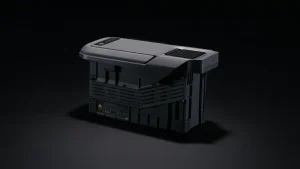
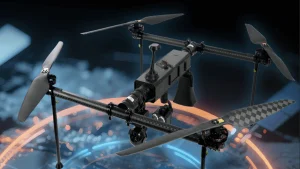
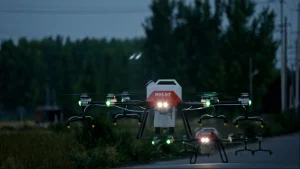
High-performance industrial frames, VTOL multi-mission platforms, and native power components engineered to maximize lifecycle efficiency.
The global industrial sectors are undergoing a significant shift. Drones are transitioning from standalone gadgets operated manually to persistent, automated, and compliant low-altitude infrastructure. Industry operators no longer look for simple quadcopters; they seek standardized ecosystems that close the programmatic operational loop: Discover → Decide → Execute → Trace.
By coupling modular composite hardware with robust edge algorithms and transparent cloud orchestration platforms, we enable utility operators, agricultural conglomerates, and public safety entities to achieve repeatable, traceable, and highly compliant workflows at scale. Standardizing this low-altitude productivity network demands strict engineering standards, structural redundancy, and complete transparency in data custody.

Deciphering technical specifications and compliance mandates critical for enterprise supply chain approvals.
Modern procurement demands hardware agnostic standardization. The ability to hot-swap dual-spectrum optical/thermal cameras, LiDAR scanners, gas sniffers, and orthophoto mapping sensors on a single universal payload port (e.g., standard quick-release interfaces) dramatically lowers capital expenditures by optimizing a single airframe across multiple field operations.
Industrial deployment environments are inherently hostile. Enterprise buyers mandate minimum IP45 to IP67 dust and water protection ratings, EMI/EMC shielding to ensure safe operational compliance close to high-voltage power lines or cell towers, and redundant motor systems to safeguard high-value sensor payloads during structural hardware failures.
As remote sensing pipelines connect directly to enterprise resource planning (ERP) platforms, strict compliance with local data protection laws (e.g., GDPR, CCPA) is vital. Hardware systems must offer secure localized data options, end-to-end AES-256 telemetry encryption, and non-cloud-dependent localized RTK/PPK processing.
Real-world operational parameters proving measurable ROI for asset owners and flight teams.
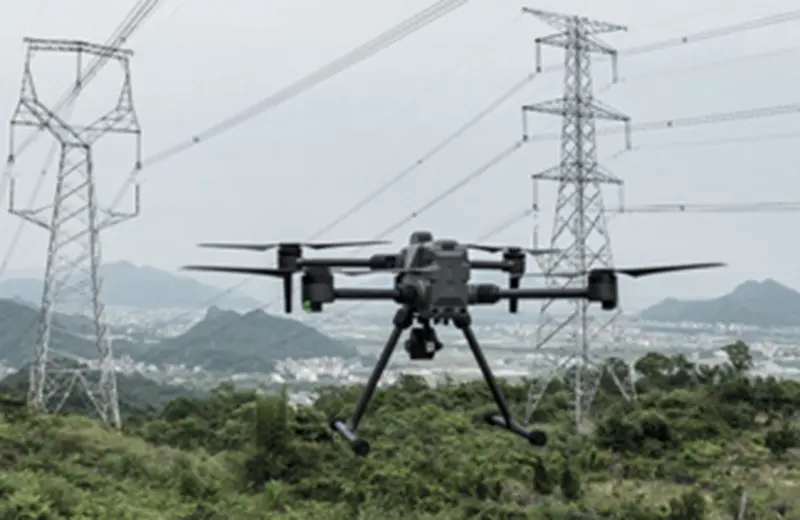
Integrating millimeter-level RTK positioning, encrypted dual-channel video links, and onboard AI defect identification modules. Real-world applications yield an estimated 40% improvement in defect discovery efficiency. Fast-charging batteries replenish from 20% to 80% capacity within 30 minutes, supported by carbon-fiber propellers and high-torque IP67 motors. Grid pilot runs demonstrate asset defect detection accuracy rates reaching up to 99.7%.
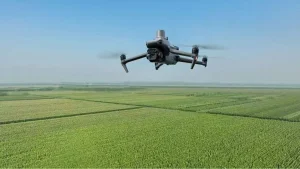
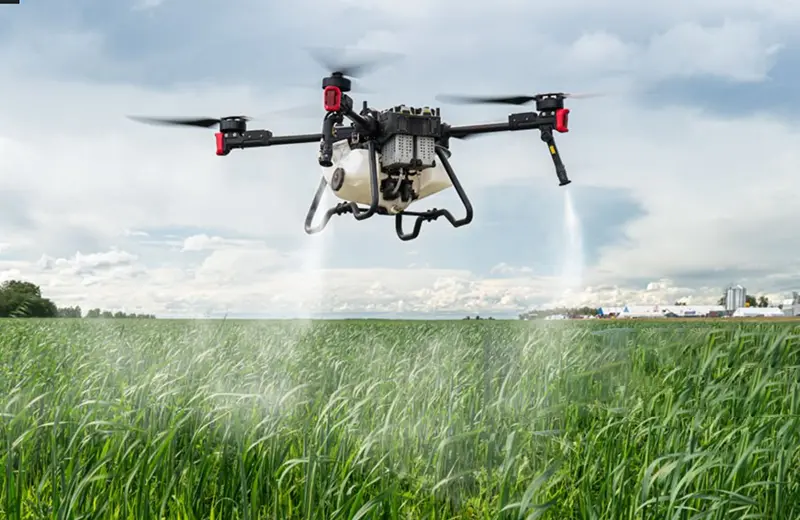
Utilizing multispectral payloads and specialized analytical suites to execute target detection algorithms that diagnose plant stress, moisture levels, and crop pests with up to 98% accuracy. Variable rate liquid spraying mechanisms cut chemical consumption by roughly 30%. Supported by industrial-grade 50Ah power packs and anti-corrosive chemical tanks, a single deployment sweep easily covers 200+ mu (≈16 acres), resulting in 20% to 30% reduction in farm operating overhead.
Dual-sensor payloads utilizing LiDAR and oblique photogrammetry capture structural datasets to generate highly accurate 0.05-meter 3D models. Standard workflows are up to 5x faster than legacy terrestrial methods, reducing project expenses by 60%. Secured via GDPR-compliant, high-bandwidth 5G links, dynamic telemetry data streams directly to cloud analytics systems, enhancing spatial planning workflows by approximately 300%.

Building high-performance UAS technology is only half the battle. Delivering actual growth requires strict operational reliability, structural validation, and robust compliance architectures.
End-to-end aerial systems designed for critical real-world deployments.


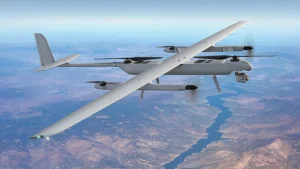
Continuous innovations that define the future of high-altitude and long-endurance autonomous flight.
While traditional lithium-polymer architectures offer robust performance for flights under 50 minutes, heavy-payload commercial missions demand clean energy density. Our ongoing research and development in integrated hydrogen propulsion systems aims to extend mission flight times to over 3 hours, offering a zero-emission alternative for long-range cross-country asset mapping.
Future fleets will not rely on cloud computing for real-time decision-making. Embedded neural network processing units (NPUs) onboard the aircraft process high-resolution video streams in real-time, executing tasks like obstacle avoidance, object tracking, and complex environmental assessments even in GPS-denied environments.
Collaborative drone swarms will soon dominate smart city logistics, emergency search operations, and continuous security sweeps. By incorporating 5G-Advanced and satellite backup links, our flight software handles real-time path planning, airspace coordination, and collision avoidance algorithms across multi-aircraft operations.
Aerospace engineers, computer vision specialists, and enterprise operations experts building compliance-driven aerial systems.
Former industrial UAV product lead; drives product architecture, standardization and ecosystem partnerships.
Computer vision & autonomy specialist focusing on sensor fusion, target detection and mission decision systems.
Drives localization and partner-led delivery across the Middle East, Pakistan, and Russia.
Aerospace & electrical engineer focusing on payload integration, EMC/EMI and reliability design.
Leads model training and mission orchestration to optimize detection accuracy and decision strategies.
Drives localization and partner-led delivery across LATAM & MENA.
We are dedicated to establishing the core infrastructure for the global low-altitude economy. By integrating 5G infrastructure, onboard AI capabilities, and hydrogen-powered clean energy solutions, we continue to develop standardized, intelligent, and environmentally friendly aerial operations.
Our development focus bridges the gap between hardware performance and compliance, allowing companies worldwide to build scalable and secure drone operations.
Technical questions addressed by our engineering and compliance teams.
High-resolution multispectral sensors, long-endurance platforms, and premium drone accessories.
 UUUFLY