How to Choose the Right UAV for Industry Use?

Time:2026-10-09 Author:Aria
0%

Choosing the right UAV for Industry begins with the worksite, not the aircraft catalog. A mining survey may require long endurance, thermal imaging, and centimeter-level positioning. A warehouse inspection may need obstacle avoidance, indoor navigation, and a quieter frame. The decision affects safety, data quality, insurance, training, and operating costs.

Industry demand is expanding, but marketing claims need careful testing. PwC estimated the potential global value of drone-powered business services at $127 billion in 2016. More recently, the Federal Aviation Administration’s Aerospace Forecast 2024–2044 reported continued growth in commercial drone activity across the United States. AUVSI’s economic research also linked expanded drone operations with major job creation and economic benefits. These figures show opportunity, not guaranteed returns. A battery that lasts thirty minutes may deliver less than twenty during cold, windy inspections.

As Brendan Schulman, former DJI Vice President, said, “Drones are tools, not toys.” That principle remains practical. Buyers should compare payload capacity, flight time, weather resistance, data security, maintenance support, and regulatory requirements. They should also examine the pilot’s workflow. Can the UAV produce an actionable report before the shift ends? Can technicians replace a damaged propeller without sending equipment overseas?

Standards matter. NIST testing methods can help organizations evaluate drone performance objectively. FAA and EASA guidance can clarify operational responsibilities, depending on location. Yet no specification sheet reveals everything. A small field trial often exposes hidden weaknesses. The best UAV for Industry is not always the fastest or most expensive model. It is the aircraft that performs reliably, safely, and repeatedly in the exact environment where people need it.
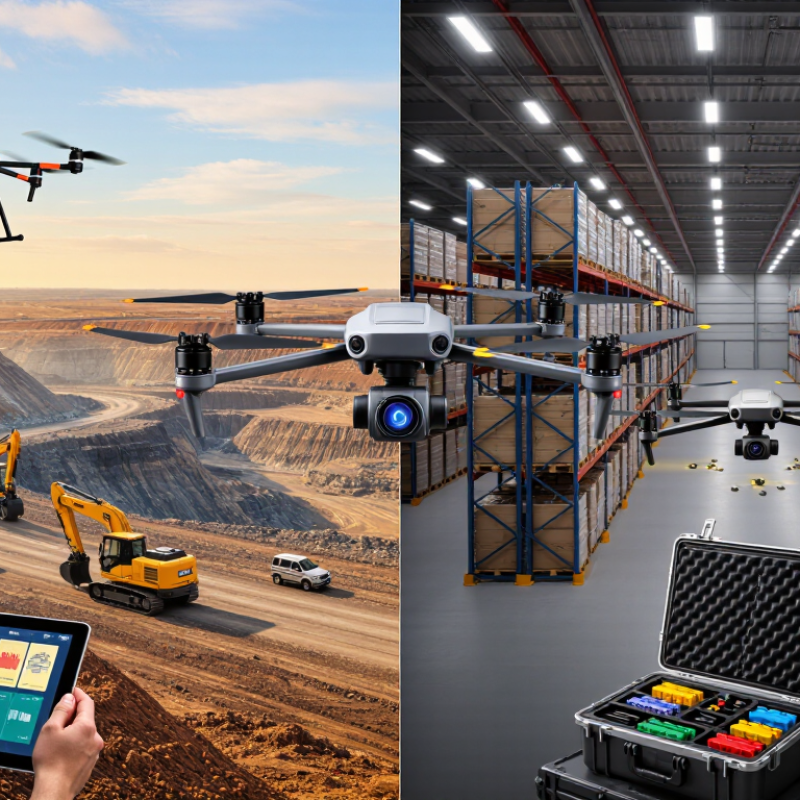
How to Choose the Right UAV for Industry Use?

Define the Mission, Operating Environment, and Success Criteria

How to Choose the Right UAV for Industry Use?

Define the Mission, Operating Environment, and Success Criteria

A suitable UAV begins with a precise mission, not a product catalogue. Write down the job in operational terms. Is it mapping a quarry, checking a roof, counting crops, or carrying a small sensor? Record the required area, inspection frequency, payload, flight time, and data type. “Better imagery” is too vague. Specify image resolution, coverage per hour, and acceptable gaps. That choice matters.

The operating environment can change the entire selection. A coastal site may expose equipment to salt spray and strong wind. A warehouse may require obstacle sensing, quiet propellers, and stable indoor positioning. Dust, heat, rain, poor lighting, and limited launch space deserve practical tests. Check battery charging, transport cases, spare parts, and operator training. These details often cost more time than the aircraft itself.

Success criteria should be measurable before the first flight. Set targets for coverage, data accuracy, uptime, reporting speed, and safe landing performance. A field team might require 95 percent image coverage and same-day data delivery. Leave room for failure. Weather delays happen, batteries age, and sensors can miss reflective surfaces. A pilot project may reveal that the chosen payload is too heavy or that processing takes longer than expected. That is not wasted effort. It is useful evidence for revising the mission and selecting a more dependable system.

Compare UAV Types, Payloads, Flight Time, and Range

How to Choose the Right UAV for Industry Use?

Choosing an industrial UAV begins with the mission, not the airframe. Multirotors offer precise hovering for inspections, mapping, and confined sites. Fixed-wing aircraft cover larger areas with greater efficiency. Hybrid VTOL systems combine runway-free operation with longer range, but their mechanical complexity demands careful maintenance.

Drone Industry Insights’ 2024 Commercial Drone Market Report estimates the commercial drone market reached about USD 30.6 billion in 2023. Growth is strong, yet expensive equipment can still fail a simple business case.

Payload changes every flight decision. A thermal camera, LiDAR sensor, or multispectral unit adds weight and power demand. Check usable payload, not the advertised maximum.

A practical field test should include the sensor, mounting hardware, spare batteries, and wind. Flight time often falls sharply under real conditions.

Ten minutes lost above a forest can disrupt an entire inspection route. Range also needs context: radio range is not the same as useful survey distance. Terrain, obstacles, weather, and data links matter.

The FAA’s 2024 Aerospace Forecast shows continued expansion in commercial unmanned aircraft operations through 2044. That growth may encourage rushed purchases. I have seen teams prioritize range while ignoring setup time and data quality. That is a costly mistake.

Choose the aircraft that completes the actual workflow, repeatedly, with a measurable safety margin. A perfect specification sheet can still produce poor field results.

Evaluate Navigation, Control, Safety, and Regulatory Features

Choosing a UAV for industrial work starts with navigation, not camera resolution. Test GPS stability beside steel racks, tall buildings, and reflective surfaces. Multipath errors can shift a planned route by several metres. Add inertial sensors, visual positioning, and terrain awareness for difficult sites. The FAA’s 2024 Aerospace Forecast recorded more than 850,000 registered drones in the United States. That scale makes reliable identification and tracking increasingly important.

Control quality appears during ordinary failures. Check obstacle avoidance, return-to-home logic, battery alerts, and landing precision in wind. A safe system should keep operating predictably after signal loss. The NIST Standard Test Methods for response robots provide useful models for measuring navigation and control performance. These tests are not perfect for every UAV. I still prefer repeatable field trials over attractive specification sheets.

Tips: Ask for documented test results, not only demonstrations. Review remote identification, operator training, maintenance records, and flight permissions under local aviation rules. For operations beyond visual line of sight, verify whether specific approval is required. The EASA Annual Safety Review stresses structured risk management in emerging aviation operations. Keep flight logs, incident procedures, and software update records. A checklist can miss human error. Leave room for that uncomfortable possibility.

Assess Data Collection, Communication, and Software Integration

Choosing a UAV for industrial work starts with the data, not the airframe. In a field assessment, define the smallest useful dataset before comparing aircraft. A high-resolution camera may reveal cracks, but it also creates heavy files. Thermal, multispectral, or LiDAR sensors add value only when the workflow can interpret them. Ask how much accuracy is required. Then test flight endurance under wind, dust, and changing light. Laboratory claims can disappoint.

Communication deserves equal attention. A remote site may have weak cellular coverage, metal structures, or strict radio boundaries. Test live video, command stability, and data transfer at the actual worksite. Store-and-forward capability helps when links drop. It should not hide an unsafe loss of control. Use encrypted channels, role-based access, and clear logs. I would rather accept slower uploads than risk incomplete records.

Software integration often decides whether a UAV becomes a tool or a costly distraction. Check whether captured files enter existing inspection, mapping, maintenance, and reporting systems without manual conversion. Open formats and documented interfaces reduce dependence on one workflow. Verify timestamps, coordinates, sensor metadata, and user permissions. Run a small pilot with real operators. My early evaluations sometimes focused too much on flight performance. That was a mistake. The better question is whether the final report reaches the right engineer, in the right format, at the right time.

How to Choose the Right UAV for Industry Use?

Assess Data Collection, Communication, and Software Integration

The comparison uses a practical 1–5 assessment scale based on common industrial UAV characteristics. Multirotor platforms generally provide precise low-altitude data collection, fixed-wing platforms offer longer coverage and endurance, while VTOL platforms balance vertical takeoff with extended flight range. Communication and software integration should be evaluated against the operating environment, payload, flight duration, and required data workflow.

Calculate Total Ownership Costs, Support Needs, and Scalability

How to Choose the Right UAV for Industry Use?

A low purchase price can hide substantial operating costs. Build a three-year total ownership cost model before selecting a UAV. Include the aircraft, payloads, batteries, chargers, software, training, insurance, storage, and scheduled maintenance. Battery replacements matter. I also price data processing and secure storage.

In field planning, I track flight hours, weather delays, repair time, and operator availability. For example, a battery may require replacement after repeated work in cold, dusty environments. If weather stops flights, lost productivity belongs in the calculation.

Some teams underestimate training time. I have made that mistake. Initial estimates often look cleaner than reality.

Support needs should be tested, not assumed. Ask about repair turnaround, spare-part availability, firmware updates, documentation, and technical assistance during critical projects. A fast response can prevent several days of downtime. Request clear service procedures. Then test them with practical questions.

Scalability starts with workflow compatibility. A single aircraft may serve one inspection team, but larger operations need repeatable training, shared data standards, fleet tracking, and trained backup operators. Check whether additional aircraft can use the same batteries, payloads, and control systems. Standardized equipment reduces complexity.

Also examine software seat costs, user permissions, and integration with existing reporting tools. The best choice supports growth without forcing a complete operational redesign.

However, growth forecasts can be wrong. A fleet plan should be reviewed quarterly, using actual flight demand, maintenance records, and staff feedback. A spreadsheet helps, but it cannot replace field experience.

FAQS

How should an organization define its UAV mission?

Describe the job in practical terms, such as roof inspection, crop counting, or quarry mapping. Record area, frequency, payload, flight time, and required data. “Better imagery” is not specific enough.

Which operating conditions should be tested before selecting a UAV?

Test wind, rain, dust, heat, poor lighting, and limited launch space. Coastal sites may expose equipment to salt spray. Indoor sites may need quiet propellers and stable positioning.

What success criteria should an industrial UAV project use?

Set measurable targets for coverage, accuracy, uptime, reporting speed, and landing performance. A team might require 95 percent image coverage and same-day reports. Leave room for failure.

How can navigation reliability be tested?

Test GPS beside steel racks, tall buildings, and reflective surfaces. These locations can shift planned routes by several metres. Visual positioning and terrain awareness may improve difficult-site performance.

What safety features deserve close attention?

Check obstacle avoidance, return-to-home behavior, battery alerts, and landing precision. Test signal loss during moderate wind. The UAV should respond predictably, not dramatically.

How important are flight permissions and operating records?

Review local aviation rules before routine operations. Confirm whether special approval is needed for operations beyond visual line of sight. Keep flight logs, incident procedures, training records, and software updates.

How should data collection be evaluated?

Define the smallest useful dataset before comparing aircraft. High-resolution images can reveal cracks but create large files. Thermal, multispectral, or LiDAR data help only when staff can interpret them.

What should be tested in communication and software integration?

Test live video, command stability, and file transfer at the actual worksite. Metal structures and weak cellular coverage can disrupt links. Confirm timestamps, coordinates, metadata, permissions, and reporting formats.

What can a pilot project reveal?

It may show that a payload is too heavy or processing takes too long. That evidence supports a better decision. My early evaluations sometimes focused too much on flight performance. That was a mistake.

Conclusion

Choosing the right UAV for Industry use begins with a clear understanding of the mission, operating environment, and measurable success criteria. Organizations should determine whether they need aerial imaging, mapping, inspection, monitoring, delivery support, or another specialized function. They can then compare suitable UAV types by payload capacity, flight endurance, range, durability, and performance in challenging conditions. Navigation accuracy, control reliability, obstacle awareness, emergency procedures, and regulatory compliance are also essential factors for safe and dependable operations.

A complete evaluation should include how the UAV collects, stores, transmits, and analyzes data, as well as whether its software can integrate with existing business systems. Beyond the purchase price, decision-makers should calculate total ownership costs, including training, maintenance, batteries, upgrades, insurance, and operational support. Finally, selecting a system that can scale with future missions, additional equipment, and expanding coverage will help organizations achieve long-term value and maintain efficient, responsible UAV operations.


Aria

Aria

Aria is a dedicated marketing professional with a deep passion for innovative strategies and a keen understanding of our company's product offerings. With a wealth of experience in the industry, Aria excels at crafting engaging content that highlights the unique features and benefits of our......