How to Choose Commercial UAV Solutions for Your Business?

Time:2026-09-19 Author:Sophia
0%

Choosing Commercial UAV Solutions is not simply a search for the fastest drone. It is a business decision involving people, data, budgets, and operational risk. A suitable system should solve a clear problem, such as inspecting roofs, mapping construction sites, monitoring crops, or delivering visual evidence after storms.

Raffaello D’Andrea, a robotics professor and autonomous aircraft expert, once said, “The future of robotics is not about robots replacing humans. It’s about robots augmenting humans.” This principle remains practical. A drone should extend a skilled team’s reach, not create another complicated burden.

Begin with the task. Define the required flight time, camera quality, payload, operating distance, and weather tolerance. A surveying company may need precise positioning and repeatable routes. A utility operator may value thermal imaging, obstacle avoidance, and secure data storage. These details matter more than impressive promotional footage.

Integration deserves equal attention. Can the UAV connect with existing GIS, inspection, or asset-management software? Are training, maintenance, spare batteries, and technical support available locally? A low purchase price can become expensive when batteries age or workflows remain manual.

Safety and regulatory compliance should guide every decision. Operators must understand local aviation rules, privacy expectations, insurance needs, and site-specific permissions. No selection process is perfect. A system that looks efficient on paper may fail in rain, poor connectivity, or crowded work areas.

The strongest Commercial UAV Solutions combine dependable hardware, useful analytics, responsible operations, and measurable business value. Test before scaling. Listen to operators. Reconsider assumptions. That small discipline often separates a helpful tool from an expensive experiment.
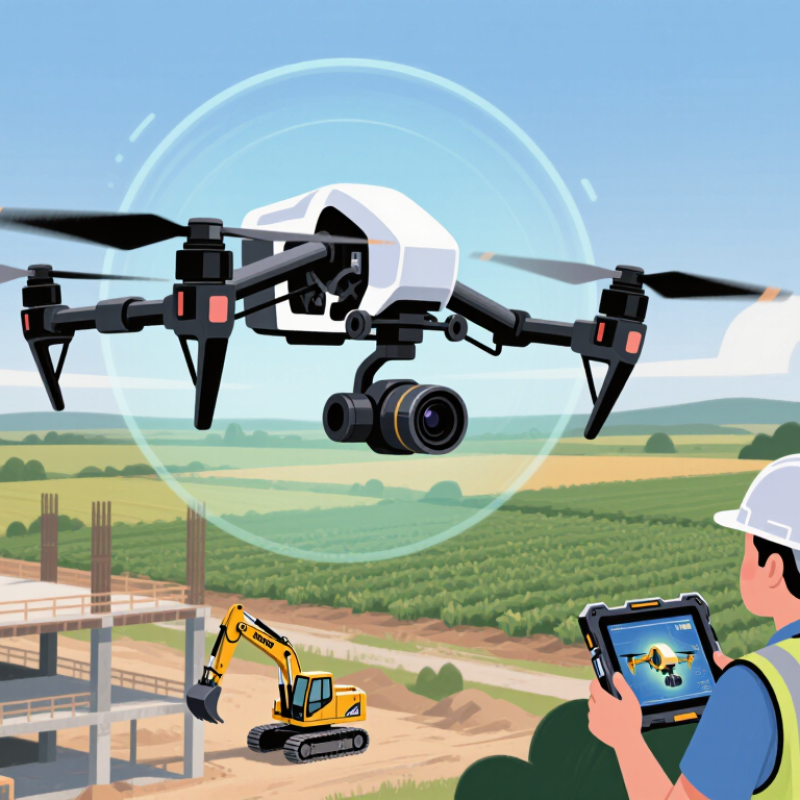
How to Choose Commercial UAV Solutions for Your Business?

Define Your Business Goals and UAV Use Cases

How to Choose Commercial UAV Solutions for Your Business?

Define Your Business Goals and UAV Use Cases

A suitable commercial UAV solution starts with a measurable business problem. Do not begin with aircraft specifications. Begin with the task. Are you inspecting roofs, mapping farmland, monitoring construction progress, or checking inventory yards?

Describe the current process in detail. Record labor hours, inspection delays, safety concerns, and reporting errors. A construction team may need weekly site maps with visible stockpiles and equipment routes. A utility company may need thermal images from difficult-to-reach structures. These use cases require different sensors, flight times, and data workflows.

Set practical success measures. For example, reduce a two-day inspection to four hours, or identify defects before maintenance costs rise. Speak with pilots, safety managers, data analysts, and field workers before choosing equipment. Their experience can reveal problems that sales materials rarely mention. A powerful camera is not helpful if workers cannot interpret its files. That is an easy mistake.

Tips:

Create a one-page use-case brief. Include the location, flight frequency, weather conditions, payload needs, data format, and expected result. Test the workflow on a small site before expanding. Keep records of training, maintenance, permissions, and privacy reviews. Requirements may change after real flights. That is normal. A failed pilot can still provide valuable evidence when documented honestly. Review the findings with an independent technical adviser, especially when operations involve people, private property, or sensitive infrastructure.

Assess UAV Types, Capabilities, and Payload Requirements

How to Choose Commercial UAV Solutions for Your Business?

Choosing a commercial UAV starts with the job, not the aircraft. Multirotor platforms suit inspections, mapping, and controlled site work because they can hover precisely. Fixed-wing systems cover larger areas efficiently, but they need suitable launch and recovery space. Hybrid aircraft offer flexibility, although their added complexity may increase training and maintenance demands. Match the aircraft’s endurance, range, wind tolerance, and navigation features to real operating conditions. A specification sheet can look impressive. Field performance may differ.

Payload requirements deserve careful measurement. Record the camera, sensor, mount, cables, and protective housing together. Weight affects flight time, balance, and motor workload. Thermal sensors support heat-loss checks, while high-resolution cameras help identify cracks and surface damage.

Some missions need accurate positioning, obstacle detection, or encrypted data storage. Confirm that the aircraft can carry the payload safely without reducing control stability. Leave practical power and weight reserves. I have learned that “maximum payload” is not always a comfortable working payload.

Tips: Start with the mission. Measure twice. Test outdoors. Simulate wind, dust, and changing light before purchase. Review local aviation rules, operator qualifications, privacy duties, and insurance requirements. Ask for maintenance records, battery-cycle data, calibration procedures, and repair support. A small pilot project can expose weak connections, poor workflow, or missing staff skills. That inconvenience is useful. It reveals what the brochure does not.

Compare Regulations, Safety Standards, and Operational Risks

Choosing a commercial UAV solution begins with the rules governing your location, industry, and operating environment. Regulations differ by country, region, and mission type. Check registration, pilot qualifications, airspace limits, privacy duties, and insurance requirements before purchasing equipment. Confirm details with the relevant aviation authority, not only a sales representative. Keep written records of approvals, maintenance, training, and flight permissions. That evidence builds trust.

Safety standards should match the real worksite. Look for documented testing, dependable control links, return-to-home functions, obstacle awareness, and secure data handling. Ask whether batteries are inspected, stored, and replaced under a clear schedule. Weather limits matter too. Wind, rain, heat, and poor visibility can change flight behavior quickly. Train operators with realistic scenarios, including lost signals and emergency landings. Real experience matters. Still, paperwork alone cannot prove safe performance.

Operational risks often appear outside the flight itself. Map nearby workers, roads, buildings, power lines, and sensitive areas before each mission. Create a pre-flight checklist and a separate emergency response plan. Protect collected images and location data through limited access and retention controls. Review incidents without blaming individuals, because small reporting gaps can hide larger failures. I would also test the solution during a low-risk pilot project before scaling. No checklist predicts every surprise. That uncertainty deserves regular review.

Evaluate Software, Data Integration, and Support Services

Choosing commercial UAV solutions starts with the software, not the aircraft. In a practical evaluation, operators should test mission planning, live maps, battery alerts, and export controls. Can a new pilot learn the workflow in one afternoon? That question matters. Good software reduces mistakes when weather changes or several teams share one site. Ask for audit logs, role-based access, and clear update notes. A polished interface is helpful, but it cannot replace dependable records.

Data integration deserves equal attention. Inspection images, flight paths, and maintenance notes should move into existing systems without repeated manual entry. Request a sample export before signing anything. Test common formats, timestamps, coordinate accuracy, and file naming. A useful platform connects with asset management, mapping, and reporting tools through documented interfaces. Small gaps become expensive. We once overlooked inconsistent location fields during a pilot project; later, analysts spent hours correcting them. That experience made validation a required step, not an optional feature.

Support services reveal the real operating standard. Confirm response hours, escalation paths, training materials, and replacement procedures. Ask who helps when a mission fails at 6 a.m. Local knowledge can matter more than a large help center. Service-level promises should be measurable, with response and resolution targets. Evaluate onboarding with a realistic scenario, such as surveying a 12-hectare site after rain. The process may feel slower than a sales demonstration. That is useful. It exposes assumptions before they affect schedules, safety, or data quality.

Calculate Total Costs, Scalability, and Return on Investment

How to Choose Commercial UAV Solutions for Your Business?

A commercial UAV should be judged by total cost, not its purchase price. Calculate the aircraft, sensors, software, training, insurance, maintenance, batteries, storage, and staff time. Include downtime. A grounded aircraft still costs money.

PwC’s Clarity from Above report estimated a potential global value of 127.3 billion dollars from drone-powered business services and labor substitution. That figure is not guaranteed revenue. Your return depends on measurable tasks, such as inspecting 40 hectares in two hours or reducing one weekly site visit. Record current labor hours, travel costs, inspection delays, and error rates. Then compare them with the UAV program’s annual cost. A simple formula is: ROI equals net annual benefit divided by total annual investment.

Scalability also changes the calculation. A low-cost system may work for one site but fail across ten locations. Check fleet management, data storage, operator availability, repair response, and integration with existing systems. The Association for Uncrewed Vehicle Systems International projected over 82 billion dollars in U.S. economic impact and 100,000 jobs by 2025, showing the sector’s expected scale. Still, projections can flatter reality. My own cost sheets often underestimate battery replacement and weather delays. Build a 15–20% contingency, test one workflow, and review actual results after 90 days. Small pilots reveal expensive assumptions.

FAQS

How should a business choose the right UAV type?

Start with the mission, not the aircraft. Multirotors work well for hovering, inspections, mapping, and controlled sites. Fixed-wing aircraft cover larger areas efficiently. They need suitable launch and recovery space. Hybrid aircraft offer flexibility, but training and maintenance may increase. Field performance can differ from specifications.

What payload details should businesses measure?

Measure the camera, sensor, mount, cables, and protective housing together. Payload weight affects flight time and aircraft balance. It also increases motor workload. Keep practical power and weight reserves. Maximum payload is not always comfortable payload.

Which sensors suit common inspection tasks?

Thermal sensors can identify heat loss and unusual temperature patterns. High-resolution cameras can reveal cracks and surface damage. Some missions require accurate positioning or obstacle detection. Secure data storage may also matter. Choose sensors around the inspection question.

How can teams test UAV performance before purchase?

Run a small outdoor pilot project before scaling. Simulate wind, dust, changing light, and wet conditions. Test battery endurance with the intended payload attached. Observe control stability and image quality. A brochure cannot reveal every weakness.

What regulations and documents should operators review?

Check local registration, pilot qualifications, airspace limits, privacy duties, and insurance requirements. Confirm details with the relevant aviation authority. Keep written records of permissions, training, maintenance, and flights. Rules vary by location and mission type. Assumptions can become expensive.

What safety features and procedures deserve attention?

Look for dependable control links, return-to-home functions, obstacle awareness, and secure data handling. Inspect batteries under a clear schedule. Set limits for wind, rain, heat, and visibility. Train operators for lost signals and emergency landings. Realistic practice matters.

How should teams manage operational and privacy risks?

Map nearby workers, roads, buildings, power lines, and sensitive areas before each flight. Use a pre-flight checklist and a separate emergency plan. Limit access to images and location data. Set clear retention periods. No checklist predicts every surprise.

What software and support questions should buyers ask?

Test mission planning, live maps, battery alerts, audit logs, and export controls. Ask whether a new pilot can learn the workflow in one afternoon. Request sample exports with timestamps, coordinates, and file names. Confirm response hours, training materials, and replacement procedures. Small data gaps become expensive.

Conclusion

Choosing the right Commercial UAV Solutions begins with a clear understanding of your business objectives and the specific tasks you want to improve, such as surveying, inspection, mapping, monitoring, or delivery support. Once your use cases are defined, compare UAV types, flight performance, endurance, automation features, and payload capacity to ensure the aircraft can collect the data your operations require. The solution should also align with applicable aviation regulations, safety procedures, privacy expectations, and risk-management practices.

Beyond the aircraft itself, evaluate the software ecosystem, data-processing capabilities, integration with existing business systems, user training, maintenance, and technical support. A complete financial assessment should include purchase or subscription fees, training, insurance, maintenance, upgrades, staffing, and operating expenses. Finally, consider whether the solution can scale as your projects, geographic coverage, and data requirements grow. By balancing performance, compliance, support, flexibility, and total cost of ownership, businesses can select a practical UAV program that delivers measurable efficiency and long-term return on investment.


Sophia

Sophia

Sophia is a dedicated marketing professional with an exceptional depth of knowledge about her company's products and services. With a keen understanding of market trends and customer needs, she crafts insightful blog posts that not only inform but also engage readers, enriching the company’s online......