China’s enterprise UAV market has expanded beyond basic aerial photography and short-range inspection. Enterprise UAVs now support surveying, construction monitoring, agriculture, public safety, logistics planning, and industrial maintenance. These applications require more than impressive specifications. They demand stable flight control, reliable data collection, strong after-sales support, and clear operational documentation.
This guide examines leading enterprise UAV manufacturers in China through a practical and evidence-based lens. It considers aircraft design, payload compatibility, autonomy features, battery performance, manufacturing capacity, software integration, and service coverage. A bridge inspection team may need a thermal camera, obstacle avoidance, and repeatable flight paths. A mining operator may value mapping accuracy, dust resistance, and fleet management tools. These differences make simple rankings unreliable.
Real-world evidence matters most. Manufacturer claims should be compared with independent testing, customer references, certifications, and published technical records. Supply continuity also deserves attention, especially when projects require replacement batteries, propellers, sensors, or firmware support years later. That part is often overlooked.
The strongest manufacturers usually combine engineering depth with responsive field service. However, no supplier is perfect. Some platforms offer excellent airframes but limited software flexibility. Others provide powerful analytics but weaker international support. Buyers should assess data security, operator training, maintenance procedures, and local regulatory requirements before selecting a system. This article introduces notable Chinese manufacturers and explains where their strengths may fit, while recognizing that market information can change quickly and public evidence is sometimes incomplete. Careful verification remains essential.
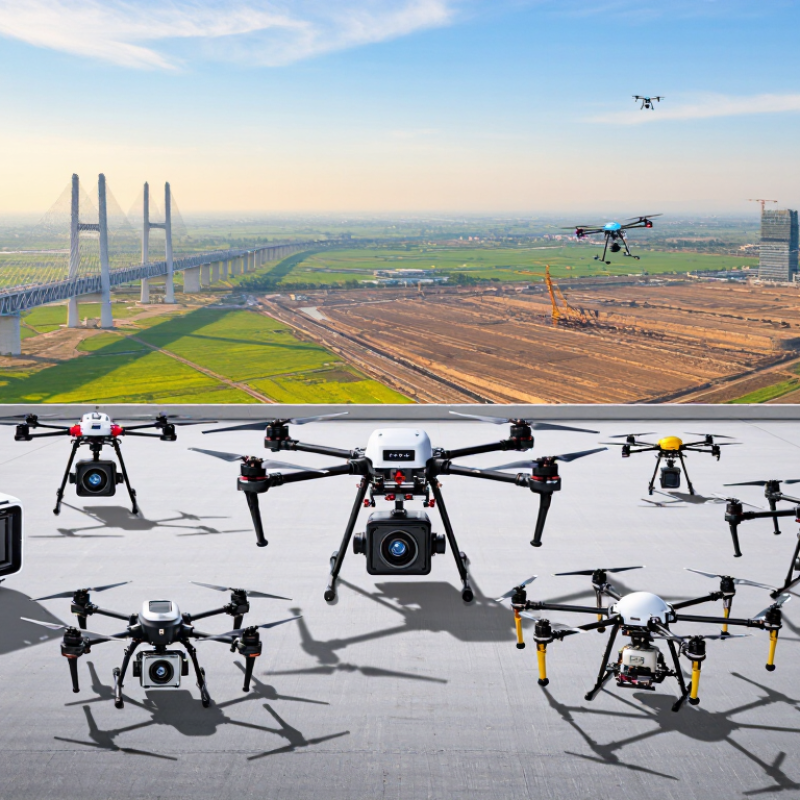
What Are the Top Enterprise UAV Manufacturers in China?
China’s enterprise UAV sector reached 1.267 million registered civil drones in 2023. This figure shows a broad commercial ecosystem, not just consumer interest. Manufacturing capacity now covers inspection, surveying, agriculture, logistics, emergency response, and industrial monitoring. However, registration numbers do not prove equal quality. Buyers should examine flight records, production testing, software stability, and maintenance support.
Strong manufacturers usually provide clear specifications for payload capacity, operating temperature, endurance, and navigation accuracy. A practical test matters more than a polished brochure. For example, teams can inspect image quality over rooftops, battery performance during repeated flights, and control reliability near metal structures. Data protection also deserves attention, especially when drones collect images of factories or public infrastructure. Local service teams can reduce downtime, but their response time should be measured, not assumed.
Tips: Ask for a demonstration using your actual work conditions. Review repair procedures, spare-part availability, firmware controls, and operator training. Check whether the supplier supports required civil aviation registration and local operating rules. A low purchase price may become expensive after batteries degrade. I may be overly cautious, yet many procurement decisions focus on flight time alone. That is a weak comparison. A dependable enterprise UAV must fit the entire workflow, from planning and deployment to secure data storage and routine maintenance.
China had approximately 1.267 million registered civil drones in 2023, highlighting the substantial scale of the country’s enterprise UAV ecosystem. The figure refers to registered civil drones and does not represent the output or market share of any individual manufacturer.
Ranking Chinese enterprise UAV manufacturers requires more than production volume. Start with certification records, traceable test reports, and documented quality systems. Check whether approvals match the aircraft’s intended category and operating environment. A factory brochure is not evidence. Ask for serial-number traceability, maintenance intervals, software revision control, and incident reporting procedures. This is where practical experience matters: a reliable supplier answers specific questions without hiding limitations. Small details matter.
Payload should be measured with batteries, sensors, and safety equipment installed, not in an empty-aircraft demonstration. Compare useful payload, center-of-gravity limits, takeoff weight, and performance at altitude, wind, and temperature. Endurance claims need similar scrutiny. Request flight logs under representative conditions, including reserve power and return-to-home margins. A platform flying 45 minutes in mild weather may deliver far less during a cold inspection shift. Numbers can mislead.
Scale covers more than assembly capacity. Review component sourcing, spare-part availability, pilot training, repair turnaround, cybersecurity governance, and after-sales support. Ask for delivery records across comparable projects. A large factory can still provide weak field support, while a smaller producer may respond faster. I would score certification 30%, payload 25%, endurance 20%, manufacturing scale 15%, and service 10%. That weighting is imperfect. Mission risk may justify changing it. A ranking should remain auditable, updated, and based on evidence rather than marketing language.
| Rank | Anonymous Manufacturer Profile | Primary Enterprise Segment | Certification and Compliance Evidence | Typical Payload Capability | Typical Endurance | Production and Service Scale | Suggested Score | Why It Ranks Here |
|---|---|---|---|---|---|---|---|---|
| 1 | Tier A: Full-Portfolio Enterprise Supplier | Industrial multirotor VTOL fixed-wing Public-safety systems | ISO 9001 quality management certification; documented civil-UAV regulatory compliance where applicable; traceable serial numbers; formal maintenance and training procedures; export-market compliance evidence when required. | Approximately 5–40 kg on industrial multirotor platforms, depending on airframe and battery configuration. | Approximately 35–60 minutes for heavy industrial multirotors; 4–10 hours for long-endurance fixed-wing or VTOL systems. | Multi-region service coverage, structured after-sales support, certified operator training, spare-parts inventory, and repeatable production processes. | 92/100 | Combines broad product coverage, high payload options, long-endurance systems, compliance documentation, and scalable deployment support. |
| 2 | Tier B: High-Volume Industrial Platform Maker | Inspection Mapping Agriculture | ISO 9001 or equivalent quality-system evidence; product manuals and test reports; battery and radio compliance documentation; documented operational limits and maintenance intervals. | Approximately 2–20 kg for common industrial multirotor configurations. | Approximately 30–55 minutes, normally measured without payload or under a stated test configuration. | High annual shipment volume, standardized product families, regional dealers, documented warranty policy, and established technical-support channels. | 87/100 | Strong manufacturing repeatability and deployment capacity, although its long-endurance or very-heavy-lift portfolio may be narrower than Tier A. |
| 3 | Tier C: Long-Endurance Surveying Specialist | Aerial surveying Corridor inspection Remote sensing | Quality-management documentation; airworthiness or operational approvals where required; ground-control, data-security, and payload-integration documentation. | Approximately 1–8 kg, with emphasis on cameras, multispectral sensors, LiDAR, or other mission payloads. | Approximately 2–10 hours for fixed-wing or VTOL systems, subject to battery, fuel, weather, and payload configuration. | Medium production volume, specialist engineering teams, mission-planning software, payload integration, and project-based technical support. | 84/100 | Excels in endurance and data-collection missions but may not match larger suppliers in heavy-lift capacity or mass-market distribution. |
| 4 | Tier D: Heavy-Lift Application Specialist | Logistics trials Emergency response Industrial delivery | Product-level safety testing; battery and propulsion test records; documented emergency procedures; customer-specific risk assessments; regulatory approvals required for the operating environment. | Approximately 20–100 kg on specialized platforms, normally with reduced flight time and stricter operating limitations. | Approximately 15–40 minutes under heavy-load conditions; empty-aircraft endurance may be materially higher. | Low-to-medium production volume, project-specific integration, specialized ground equipment, and limited but technically capable service coverage. | 80/100 | Scores highly for payload capability and mission specialization, but receives a lower overall ranking because production scale and endurance are usually more constrained. |
| 5 | Tier E: Cost-Efficient Regional OEM/ODM Supplier | Agriculture Basic inspection Custom integration | Factory quality procedures; component declarations; electrical and radio compliance documents for target markets; customer-specific inspection records; certification scope should be checked model by model. | Approximately 5–30 kg for agricultural or industrial multirotor configurations. | Approximately 20–45 minutes, depending on tank or cargo load, battery capacity, and environmental conditions. | Small-to-medium production scale, flexible customization, distributor-led support, and variable availability of international service resources. | 74/100 | Offers competitive customization and pricing, but normally has less extensive certification evidence, service coverage, and long-term platform support. |
| 6 | Tier F: Emerging R&D-Oriented Manufacturer | Prototype platforms Special missions Technology demonstration | Prototype test reports, engineering validation records, and applicable radio or electrical compliance documents; commercial certification and operational approvals may still be developing. | Approximately 1–15 kg, depending on prototype maturity and mission design. | Approximately 20–120 minutes for early commercial platforms; published endurance should be verified under controlled test conditions. | Limited production capacity, engineering-led delivery, small support team, and higher dependence on custom integration. | 66/100 | Can offer innovative designs and rapid customization, but receives a lower ranking because production consistency, certification depth, and service scale are still developing. |
Ranking method: certification and compliance evidence 30%; payload capability 25%; endurance 20%; production and service scale 25%. Payload and endurance figures are representative enterprise-UAV ranges rather than guaranteed specifications. Actual performance varies with aircraft configuration, battery or fuel type, weather, altitude, payload, and local operating regulations.
China’s enterprise UAV sector is defined by two practical product profiles: commercial multirotors and fixed-wing systems. A leading multirotor manufacturer typically serves construction, energy, surveying, and public-safety teams. Its aircraft can hover beside a transmission tower, capture overlapping images, and land within a small site. Thermal cameras, laser scanners, and high-resolution payloads support repeatable inspections. This flexibility explains their popularity in daily field operations.
A specialized fixed-wing manufacturer targets longer routes and broader mapping projects. Its aircraft can cover large agricultural areas, mining zones, and coastlines with fewer battery changes. Some platforms combine vertical takeoff with efficient wing-borne flight. That design reduces runway dependence, but it increases mission-planning demands. Operators must manage launch conditions, wind, terrain, and recovery space. The distinction is useful, but not absolute.
MarketsandMarkets estimates that the commercial drone market could grow from about USD 20.8 billion in 2023 to USD 54.6 billion by 2030. Drone Industry Insights also identifies mapping, inspection, and surveying as major enterprise use cases. These figures support strong demand for both aircraft categories. Yet market growth does not guarantee reliable performance. A multirotor may lose productivity during extended surveys. A fixed-wing system may need more training and maintenance. Field experience still matters. Manufacturers should publish payload limits, endurance tests, weather conditions, and service data. Buyers should question impressive flight claims. That assumption can fail.
China’s leading enterprise UAV manufacturers are reshaping precision farming through repeatable field operations. Two major agricultural platforms have logged 23.11 million flight hours, according to company-reported operational data. That figure suggests mature systems, not a short-lived technology trial.
In practice, farmers can map uneven crops, spray targeted areas, and inspect field edges before sunrise. Multispectral cameras reveal stressed plants that human crews may miss. Automated route planning also reduces overlap, chemical waste, and operator fatigue. FAO’s The State of Food and Agriculture 2022 highlights digital automation as a tool for improving farm efficiency and resilience. Drone Industry Insights’ 2024 market analysis also identifies agriculture as a major commercial drone application.
Yet flight hours do not prove every result. Weather, crop type, water quality, and local training still affect outcomes. I would treat 23.11 million hours as strong operational evidence, not a universal performance guarantee. Some farms may still need better maintenance records and independent yield comparisons.
Tips: Check battery cycles, spray uniformity, pilot training, and service response times. Request field data from similar crops and local conditions. Start with a small test area. Measure results honestly, including failures.
China's enterprise UAV sector is moving from prototypes toward regulated passenger aircraft. The most significant example is a certified electric vertical takeoff and landing aircraft developed for urban air mobility. Its developer obtained type, production, and standard airworthiness certificates from the Civil Aviation Administration of China (CAAC). That sequence matters. It demonstrates compliance with design, manufacturing, and airworthiness requirements, not merely a successful demonstration flight.
The aircraft uses multiple electric rotors, distributed propulsion, and automated flight controls. These systems can support short urban routes, airport links, and scheduled sightseeing operations. Cabin details remain practical: two passenger seats, compact luggage space, clear emergency instructions, and monitored battery status. Operators still need approved routes, trained personnel, maintenance procedures, and local operating permissions. Certification does not remove weather, noise, vertiport, or public acceptance challenges.
From an industry research perspective, this manufacturer deserves attention because its evidence is measurable. CAAC documents, test programs, production controls, and service records offer stronger signals than promotional videos. Yet the market is not mature. Passenger demand, charging capacity, and insurance models remain uncertain. Some timelines may also prove optimistic. That is a weakness worth acknowledging. Future buyers should examine certification scope, operating data, incident reporting, and after-sales support before judging any enterprise UAV manufacturer.
China had 1.267 million registered civil drones in 2023. This indicates broad commercial use. Registration alone does not prove quality.
Common sectors include surveying, inspection, agriculture, logistics, and emergency response. They also support industrial monitoring. Use cases differ greatly.
Multirotors can hover near towers, rooftops, and construction sites. Fixed-wing systems cover larger areas with fewer battery changes. Some systems combine both flight styles.
Review payload capacity, flight endurance, navigation accuracy, and operating temperature. Ask for flight records and production testing. Do not trust a polished brochure alone.
Request a demonstration at the actual work site. Inspect rooftops, metal structures, and uneven terrain. Check image quality, battery performance, and control stability.
Check battery cycles, spare-part availability, repair procedures, and service response times. A low purchase price may become expensive later. Battery aging is easy to underestimate.
Agricultural UAVs can map uneven crops and inspect field edges. They may spray selected areas with planned routes. Multispectral cameras can reveal stressed plants.
No. Flight hours show operational experience, not universal performance. Weather, crops, water quality, and training still matter. I may be overly cautious, but small field trials remain wise.
China’s Enterprise UAVs sector has developed into one of the world’s most active commercial drone markets, supported by 1.267 million registered civil drones in 2023. This summary examines how Chinese UAV manufacturers can be evaluated through certification, payload capacity, flight endurance, reliability, production scale, and after-sales support. It also highlights the different roles of multirotor and fixed-wing platforms in surveying, inspection, logistics, emergency response, and other professional applications.
Agricultural UAVs are expanding precision farming by supporting targeted spraying, mapping, and crop monitoring across approximately 23.11 million flight hours. At the same time, passenger UAV development is advancing through structured testing, safety validation, and civil aviation certification. Together, these trends show how China’s enterprise drone industry is moving from individual products toward integrated solutions that combine operational efficiency, data services, autonomous functions, and scalable deployment.

UUUFLY