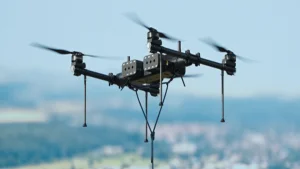
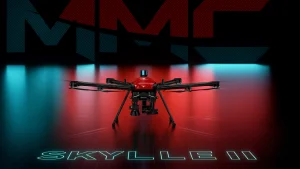
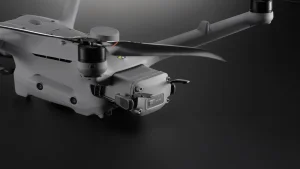
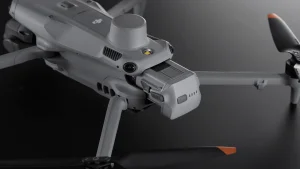
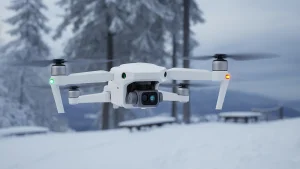
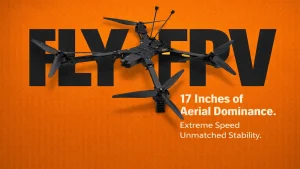
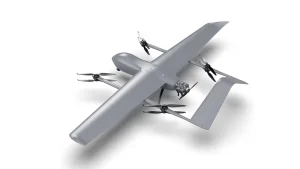
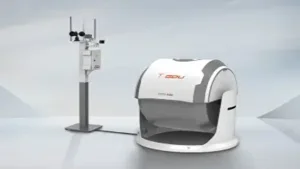
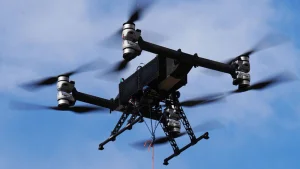
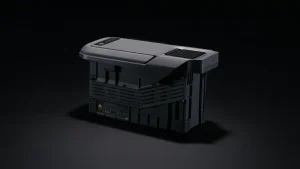
Pioneering standard-compliant, heavy-payload powerplants and UAV accessories engineered for zero-failure field execution.
Accelerating Global Commerce Through Seamless Air-Ground Robotic Integration
The global industrial landscape is undergoing a massive transformation, shifting from isolated robotic tasks to holistic, multi-domain autonomous ecosystems. Organizations looking to buy autonomous ground vehicle (AGV) systems and UAV platforms are no longer just looking for hardware—they are sourcing reliable, high-end infrastructure capable of functioning autonomously across diverse terrains and networks. UUUFLY is at the forefront of this convergence. By merging high-integrity Unmanned Ground Vehicles (UGVs) and advanced Unmanned Aerial Vehicles (UAVs), we establish systemic solutions that close the loop of Discover, Decide, Execute, and Trace.
With engineering rigor, complete environmental testing, and stringent compliance frameworks, we translate robotic mobility into quantifiable financial yields. Our systems are engineered to navigate severe electro-magnetic interferences, high wind shears, and harsh agricultural corrosives. When seeking leading autonomous ground vehicle manufacturers and suppliers, international procurement directors choose UUUFLY for our absolute commitment to open APIs, modular payload capabilities, and uncompromising security protocols.
Proven industrial UAV & UGV pipelines operating at scale under extreme deployment criteria.
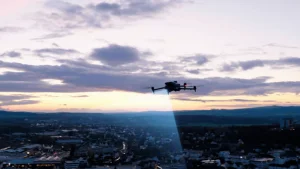
Equipped with millimeter-level RTK positioning and AES-256 encrypted video links, our dual-spectrum defect detection and custom AI computer vision pipelines optimize inspection workflows. Defect discovery efficiency has improved by about 40%, maintaining total operational resilience in high-voltage grids. Features a fast-charge system compatible with major fleets (80% in 30 minutes) and rugged carbon-fiber propellers with IP67 rated motors. In extensive grid pilot programs, overall defect detection reached 99.7% accuracy.
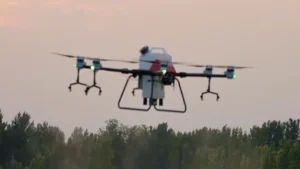
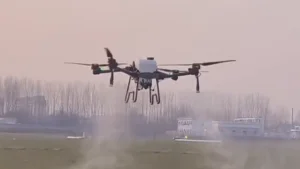
Our multispectral payloads and agricultural AI models provide automated, early-stage diagnostics of crop diseases and pest infestations with an accuracy of roughly 98%. Variable-rate spraying mechanics reduce active chemical use by up to 30%. Fitted with a high-capacity 50Ah battery system and a corrosion-resistant tank, a single mission runtime handles up to 200+ mu (~16 acres) of farmland. Across continuous commercial campaigns, farms report a 20% to 30% reduction in overall operating overheads.
By integrating airborne and ground-based LiDAR sensors with oblique photogrammetry arrays, we achieve mapping outputs down to a 0.05-meter 3D volumetric accuracy. Our spatial scanning engine speeds up model compilation by approximately 5 times and lowers costs by 60%. Utilizing fully GDPR-compliant encrypted cloud links and 5G cellular modems, geospatial data is synchronized instantly, elevating city planning and digital twin operational pipelines by 300%.
Our open platform features highly optimized autonomous path-planning engines, distributed fleet scheduling managers, dynamic mission orchestration layers, and a robust edge-to-cloud data stream. Through secure, standard RESTful APIs and modern message brokers, it integrates directly with global ERP systems, enabling secure, observable, and fully compliant unmanned operations.
UUUFLY's state-of-the-art production base stands as a symbol of structural excellence in the global unmanned hardware market. By managing vertical supply chains from structural carbon fiber fabrication to surface mount technology (SMT) and proprietary firmware loading, we shield customers from modern logistical disruptions. Our facility employs rigorous Quality Management Systems (QMS), subjecting every vehicle framework, electronic speed controller (ESC), and motor payload to rigorous environment chamber testing.
Our strategic position within China’s premier industrial technology cluster grants us real-time access to raw materials and components, translating directly into shorter lead times, highly cost-effective prototyping, and rapid scaling capacities. Whether manufacturing heavy-duty quadcopters or multi-axle autonomous ground vehicles, our automated testing stations guarantee that 100% of manufactured systems conform to global electromagnetic compatibility (EMC/EMI) baselines and stress limits.

Pioneering the Next Era of Multi-Agent Autonomy and Alternative Energy Systems
Expanding localized edge-compute capacities to handle heavy real-time SLAM computations on low-power architectures. Through integrated 5G networking modules, future fleets will achieve seamless peer-to-peer mesh connectivity, letting aerial and ground robots share environmental maps instantaneously without relying on cellular base stations.
In line with global decarbonization strategies, we are investing in high-density hydrogen fuel-cell setups. Integrating hydrogen cylinders with lightweight structural components will double standard flight windows and ground vehicle operations, bypassing traditional lithium runtime limits.
Creating centralized API schemas to align Autonomous Ground Vehicles (AGVs) with Unmanned Aerial Systems (UAS). UGVs act as mobile ground bases, hot-swapping batteries and discharging payloads, while UAS scout overhead to route ground units through complex, unmapped topographies.
Tailored air-ground collaborative architectures designed to automate critical infrastructure workflows.

Empowering search units and emergency response teams with tactical overwatch and automated terrain scanning systems.
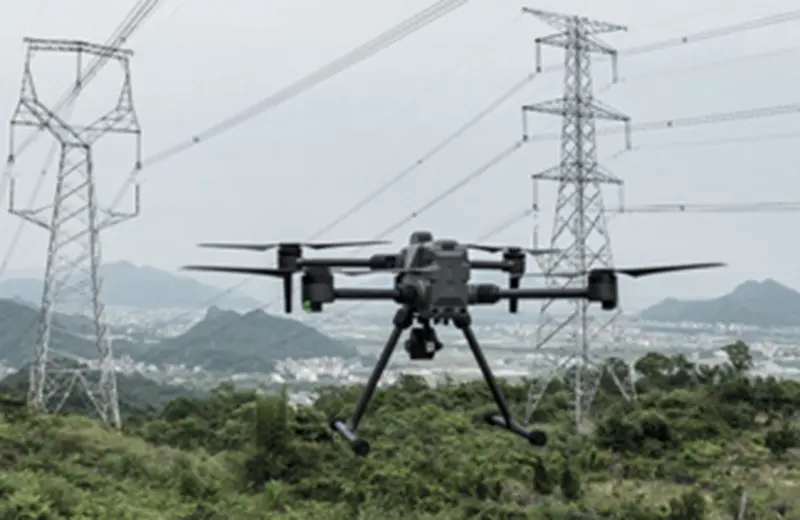
Replacing manual inspections with automated flight corridors, LiDAR sensors, and visual imaging cameras.

Generating real-time 3D scans and structural health reports for large project managers.
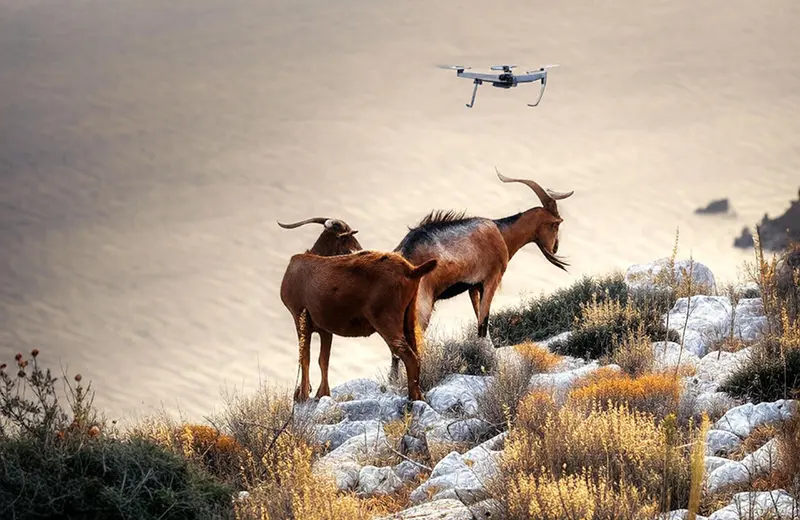
Continuous tracking and conservation mapping using silent powertrains and custom multispectral lenses.
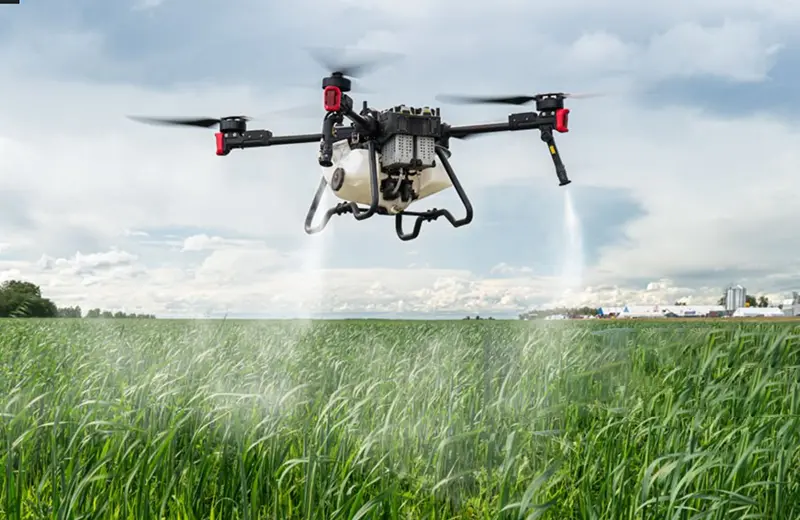
High-payload variable spray systems paired with multispectral health monitoring cards.
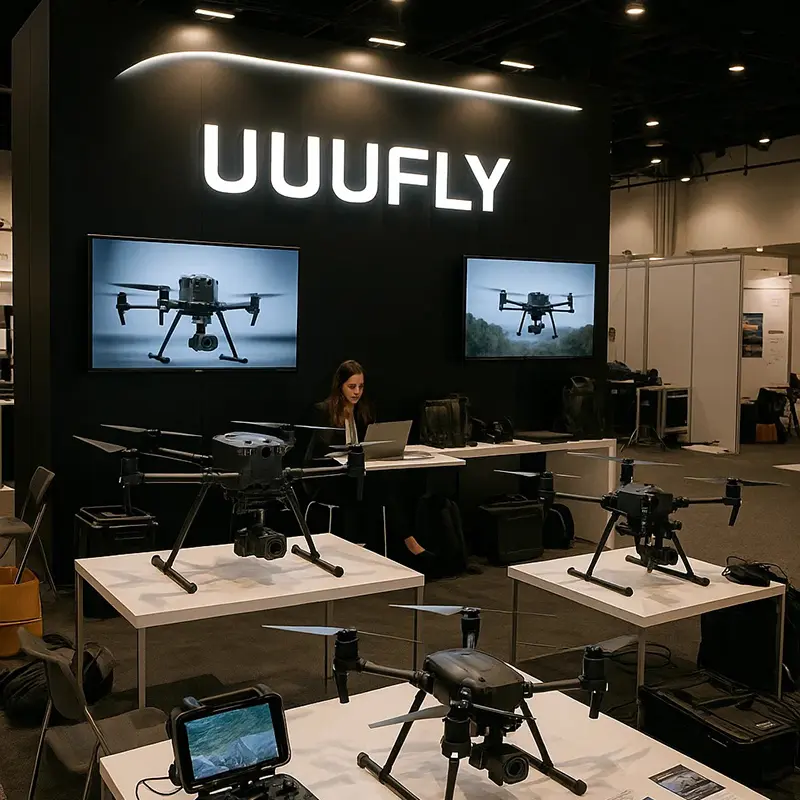
For global entities looking to procure systems from an autonomous ground vehicle manufacturer or UAV supplier, data security and regulatory compliance are top priorities. UUUFLY is engineered from the ground up to satisfy modern compliance directives:
Combining aerospace engineering, autonomous software architecture, and global operations expertise.
Evaluating Autonomous Systems on Longevity, Security, and Scalability
Procuring industrial-grade unmanned systems requires a deep evaluation of the manufacturer’s technical depth and supply chain capabilities. Procurement officers must look beyond list prices and focus on structural indicators of Total Cost of Ownership (TCO). A critical baseline is payload modularity: platforms must feature standardized power and data connections (such as gRPC, CAN bus, and DJI Payload SDK interfaces) to accommodate future sensors without requiring redesigns.
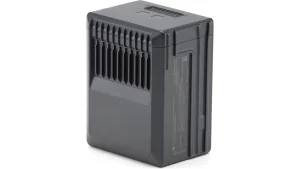
Additionally, the reliability of power and battery systems defines the operational viability of any deployment. Batteries must feature smart management chips that report temperature, cycle health, and cell voltage in real time. For mission-critical tasks, ensure manufacturers provide robust link security using AES-256 protocols and offer on-premises software deployment to maintain control over sensitive operational data.
Answers to key engineering, integration, and procurement questions.
Our systems utilize highly secure, dual-link mesh networks combined with local Wi-Fi and 5G connections. This lets aerial and ground platforms share telemetry data, map obstacles, and swap routes locally, maintaining operational integrity even in GPS-denied environments.
All telemetry and video feeds are protected with AES-256 encryption. We respect strict data privacy guidelines (such as GDPR) by offering complete on-premises server setups, ensuring operational data never leaves your enterprise firewalls.
Our intelligent batteries feature built-in self-heating systems for cold conditions and advanced thermal dissipators for high-heat deployments. The smart battery management unit (BMS) continuously monitors temperature, balancing cell voltages to extend overall lifecycle runtime.
Yes. We offer standardized physical interfaces and comprehensive SDK documentation. This allows you to integrate third-party sensors, LiDAR units, thermal cameras, and robotic grippers into our aerial and ground platforms with ease.
Procure industrial UAVs, modular batteries, and automatic docking stations for automated work operations.
 UUUFLY