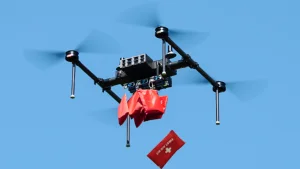
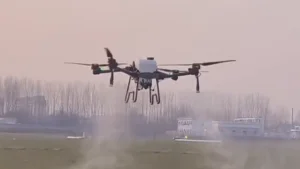
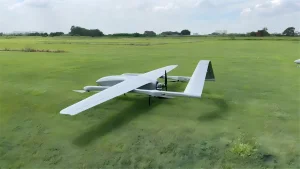
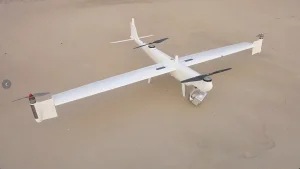
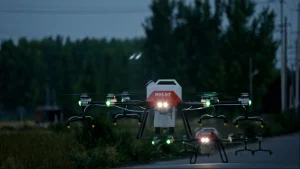
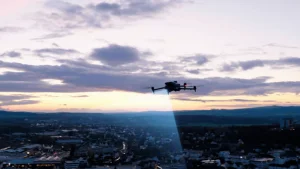
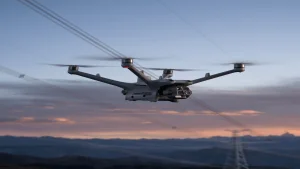
Explore our top industrial quadcopters, VTOL platforms, and heavy-lift transport UAVs designed for critical inspection, search and rescue, and agricultural applications.
The global commercial inspection landscape is undergoing a structural paradigm shift. Drones are transitioning from basic manual imaging platforms into fully autonomous, edge-computing nodes integrated into corporate asset management pipelines. Standard off-the-shelf UAV products often fall short when deployed in hazardous, GPS-denied, or highly electromagnetically active environments like high-voltage transmission lines, offshore wind turbines, and petrochemical refineries.
To resolve these engineering bottlenecks, enterprise operators are increasingly relying on custom inspection drone factories to design and manufacture bespoke airframes. By optimizing battery chemistry (such as solid-state or hybrid hydrogen architectures), embedding high-performance RTK/PPK GNSS receivers, and engineering modular payload configurations (combining LWIR thermal, high-resolution optical, and LiDAR sensors), modern custom drones deliver safety, data integrity, and compliance metrics that off-the-shelf platforms simply cannot match.
When choosing a manufacturing partner for custom inspection drones, organizations must prioritize systemic traceability, electromagnetic compatibility (EMC/EMI shielding), and regulatory compliance. The ultimate goal is not just to purchase an aerial vehicle, but to deploy secure, repeatable data-gathering infrastructure that integrates directly into existing SCADA, GIS, or ERP systems.

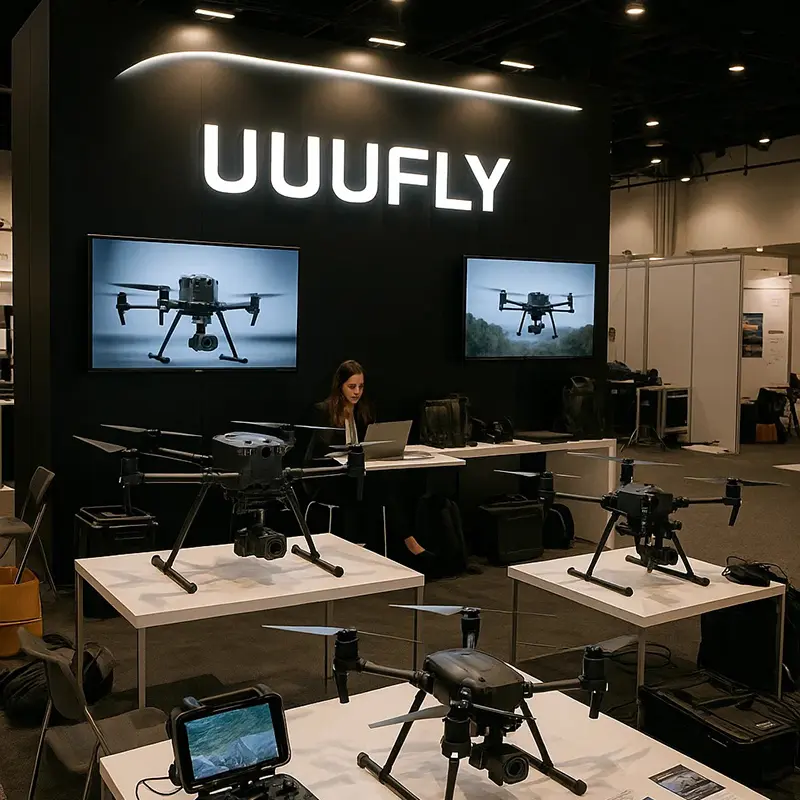
We turn drones from tools into infrastructure, enabling the global low‑altitude economy with engineering rigor and compliance.
UUUFLY builds repeatable, traceable, and compliant UAV systems through integrated innovation across hardware, algorithms, and data operations. We close the loop of Discover → Decide → Execute → Trace for power, agriculture, and smart‑city customers, delivering measurable aerial productivity at scale.
Our core capabilities include:
Our industrial capabilities span across four specialized domains, providing robust hardware systems paired with intelligent cloud processing software.
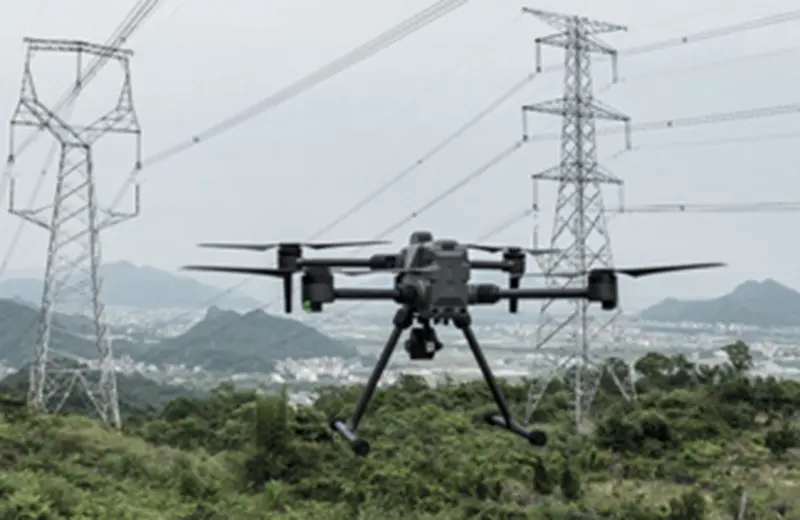
With millimeter‑level positioning and encrypted video links, combined with dual‑spectrum defect detection and AI target recognition, defect discovery efficiency improves by about 40%. Autonomous patrols and emergency response remain reliable in complex environments. The fast‑charge system is compatible with mainstream fleets (80% in 30 minutes), and carbon‑fiber propellers with IP67 motors cover most models. In multiple grid pilots, defect detection reached 99.7%.
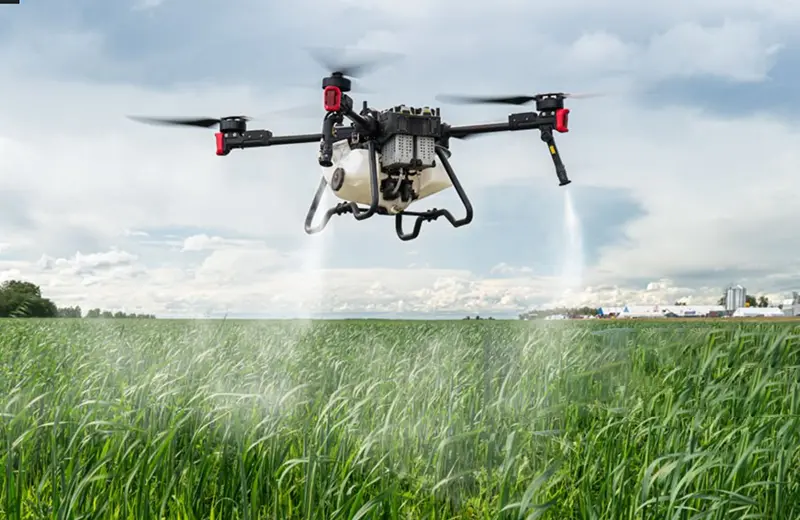
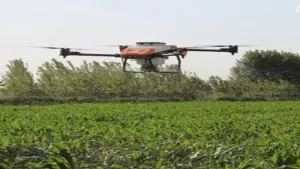
Multispectral payloads and AI analytics enable early diagnosis of pests and diseases (about 98% accuracy). Variable spraying reduces pesticide use by roughly 30%, while a 50Ah battery and corrosion‑resistant tank allow a single flight to cover 200+ mu (≈16 acres). At scale, farms typically see 20–30% lower operating costs.
Combining LiDAR with oblique photogrammetry delivers 0.05‑m 3D mapping, making modeling about 5× faster and reducing cost by 60%. With GDPR‑compliant encrypted transmission and 5G for real‑time cloud analytics, our data underpins urban planning and digital‑twin programs, boosting planning efficiency by around 300% in typical projects.
Our centralized operation platform provides autonomous routes, fleet scheduling, mission orchestration, and an edge‑to‑cloud data pipeline. Standardized open APIs and reliable message buses integrate seamlessly with legacy enterprise systems (including SAP, GIS, and Maximo) to build a secure, highly observable low‑altitude operational network.
Harnessing the world's most advanced aerospace component ecosystem to build custom UAV platforms at unmatched speed and reliability.
Developing robust, industrial-grade custom inspection drones requires more than just basic assembly. It demands access to a highly integrated, specialized component ecosystem. By establishing our primary production facilities within China's premier UAV manufacturing clusters, UUUFLY leverages major competitive advantages:
Our tailored airframes and specialized payload configurations address the challenges of primary industrial sectors globally.
To become the core infrastructure provider for the global low‑altitude economy. We will keep integrating 5G, AI, and hydrogen energy to drive standardized, intelligent, and green aerial operations.
Our long-term engineering framework focuses on solving two primary limits of current unmanned flight operations: flight endurance and edge intelligence. We actively invest in research to drive development in these areas:
Transitioning from traditional lithium polymer (LiPo) cells to high-density solid-state batteries and hydrogen fuel cells, extending hover limits beyond 90 minutes with full payloads.
Embedding dedicated Neural Processing Units (NPUs) within the flight computer to detect rust, concrete cracks, and wire corrosion locally, bypassing bandwidth limitations.
Employing next-generation 5G-Advanced protocol stacks for zero-latency, beyond-visual-line-of-sight (BVLOS) operations across urban and mountainous terrain.
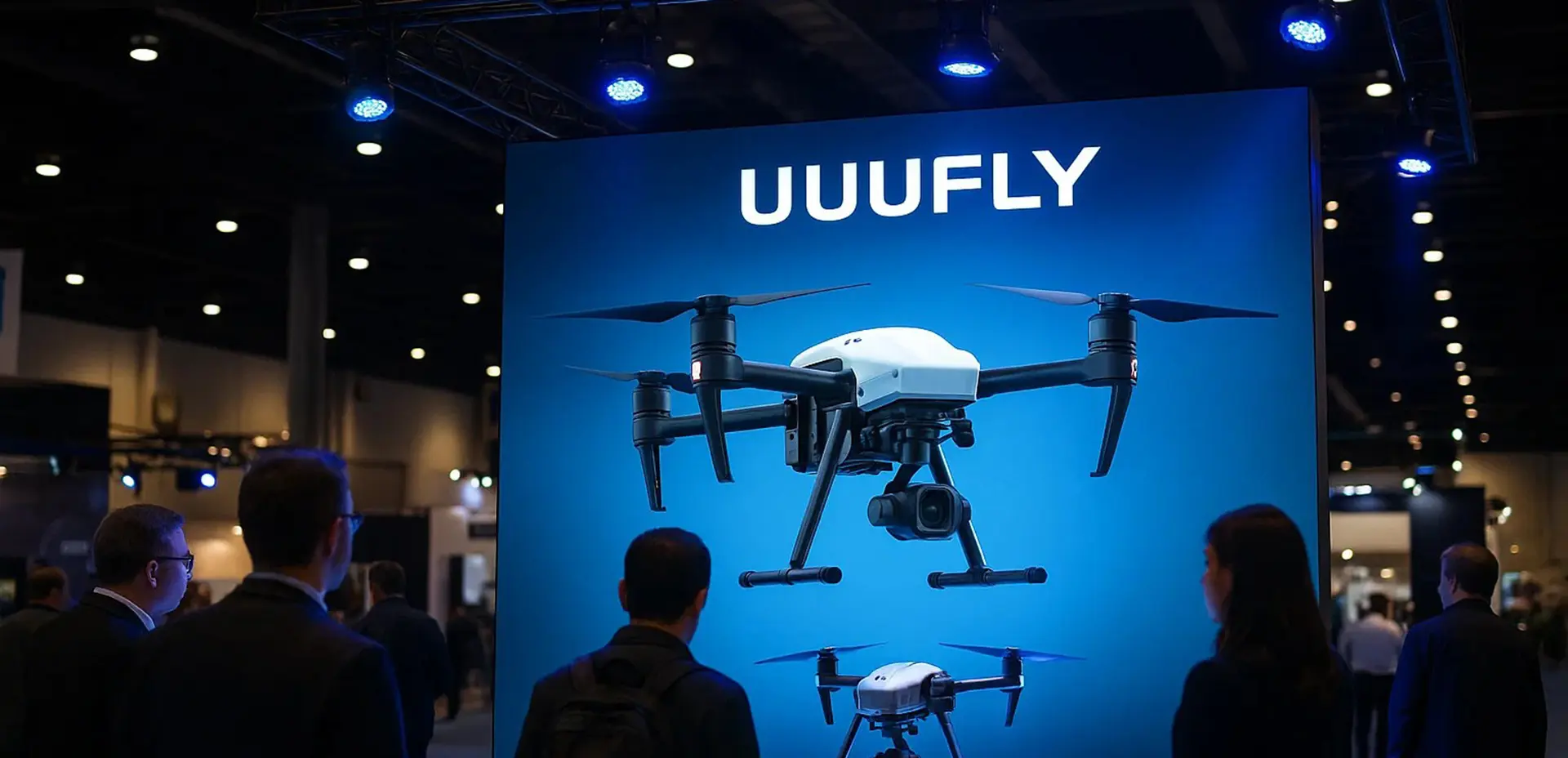
Our commitment to field-tested reliability, certified hardware quality, and uncompromising data security standards sets us apart.
Over 500,000 core components successfully shipped to more than 300 enterprise operators across 30 cities globally, demonstrating high repeat customer rates.
Every system is built to industrial specifications, from mechanical structural analysis and advanced EMC/EMI shielding to strict data link security validations under stress conditions.
24/7 dedicated support teams providing multilingual operational assistance in English, Chinese, Japanese, Russian, French, Spanish, and Arabic.
All hardware platforms carry CE, FCC, and RoHS certifications. Core telemetry and video downlinks utilize military-grade AES‑256 encryption, ensuring secure asset monitoring operations.
Standardized payload hardware interfaces (e.g., DJI SkyPort or generic quick-release gimbals) and SDKs let your software team integrate drones directly into custom dispatching software.
UUUFLY combines aerospace engineering, embedded systems design, computer vision research, and large-scale operational logistics.
We navigate complex regulatory landscapes to ensure seamless compliance and robust data security for global deployments.
Navigating the airspace regulations of civil aviation authorities (like FAA in the US, EASA in Europe, and CAA in various regions) is a core requirement for enterprise UAV operations. UUUFLY builds custom platforms to meet standard aviation compliance frameworks:
For national grid networks, military installations, and critical oil facilities, data residency is paramount. Unlike mass-consumer platforms, UUUFLY offers flexible data paths:
Clear, engineering-focused answers to the most common inquiries from procurement directors and operations managers.
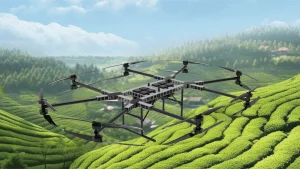
Browse our comprehensive range of long-endurance power systems, heavy spray multirotors, and military-grade eVTOL platforms.
 UUUFLY