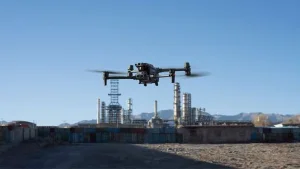
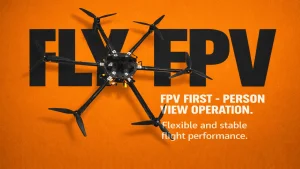
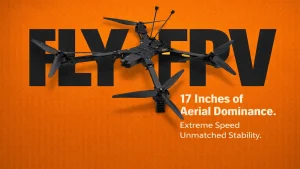
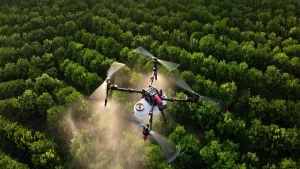
Industrial-grade precision, carbon-fiber aerodynamics, and high-performance components optimized for extreme missions.
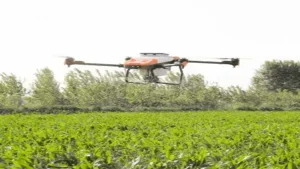
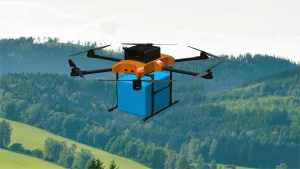
The global logistics paradigm is experiencing a fundamental shift toward aerial automation. Custom delivery drones represent the apex of this shift, acting not merely as vehicles but as key nodes in a fully integrated low-altitude digital infrastructure. From urgent medical courier operations to dense urban last-mile distribution networks, enterprise buyers require UAV systems capable of performing repeatable missions under strict regulatory and environmental parameters.
As a leading developer, UUUFLY turns drones from tools into infrastructure, establishing dependable aerial pipelines. By integrating high-strength carbon-fiber composite materials, highly efficient brushless propulsion arrays, and AI-enabled edge perception systems, we resolve the historical trade-offs between load capacity, flight duration, and structural longevity.
Modern air logistics demands a compliance-first design approach. Regulatory frameworks such as EASA and the FAA require rigorous testing profiles, fail-safe redundancy systems, and secure communication protocols.
Developing custom cargo UAVs involves balancing battery power management (BMS), drag coefficients, and structural structural integrity. UUUFLY’s design standard employs dual-IMU, dual-GNSS RTK configurations to provide centimeter-level positional accuracy, ensuring safe autonomous navigation in dense urban environments and challenging weather conditions.
We turn drones from tools into infrastructure, enabling the global low‑altitude economy with engineering rigor and compliance.
UUUFLY builds repeatable, traceable, and compliant UAV systems through integrated innovation across hardware, algorithms, and data operations. We close the loop of Discover → Decide → Execute → Trace for power, agriculture, and smart‑city customers, delivering measurable aerial productivity at scale.
Our core capabilities include dual‑spectrum defect detection (power inspection), multispectral sensing & variable spraying (precision agriculture), 0.05‑m 3D mapping (smart city), autonomous routes & fleet scheduling (scaled operations), and an end‑to‑end edge‑to‑cloud data pipeline for enterprise governance & compliance.
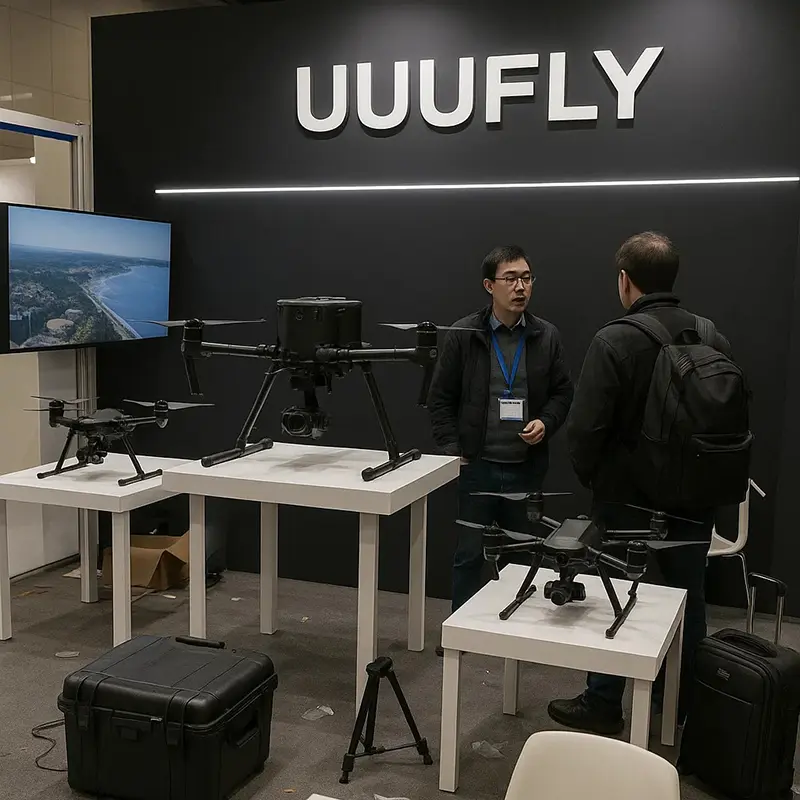
How our centralized production ecosystem delivers cost-efficiencies and technological superiority to global buyers.
Our production facility leverages the world's most advanced aerospace supply chain ecosystem in Southern China. From ultra-high modulus T700 carbon-fiber materials to precision CNC-machined aerospace alloys and custom PCB layouts, we source and assemble every critical component in-house. This ecosystem cuts development lead times by 60% compared to Western manufacturers.
We follow strict industrial QA/QC workflows. Every custom delivery drone undergoes comprehensive stress tests, including hardware-in-the-loop (HIL) simulation, electromagnetic compatibility (EMC/EMI) evaluations, environmental chamber testing down to -20°C, and dynamic wind tunnel tests to ensure stable performance under heavy wind conditions.
Our factory provides high-capacity OEM and ODM capabilities. We can adapt drone frames, payload mechanisms, and control software to meet specific operational requirements. Our scaled manufacturing pipelines allow us to offer competitive pricing without compromising on premium industrial components or compliance certifications.
Deploying advanced, specialized aerial infrastructure across complex industrial sectors.
With millimeter‑level positioning and encrypted video links, combined with dual‑spectrum defect detection and AI target recognition, defect discovery efficiency improves by about 40%. Autonomous patrols and emergency response remain reliable in complex environments.
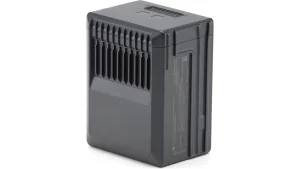
The fast‑charge system is compatible with mainstream fleets (80% in 30 minutes), and carbon‑fiber propellers with IP67 motors cover most models. In multiple grid pilots, defect detection reached 99.7%.
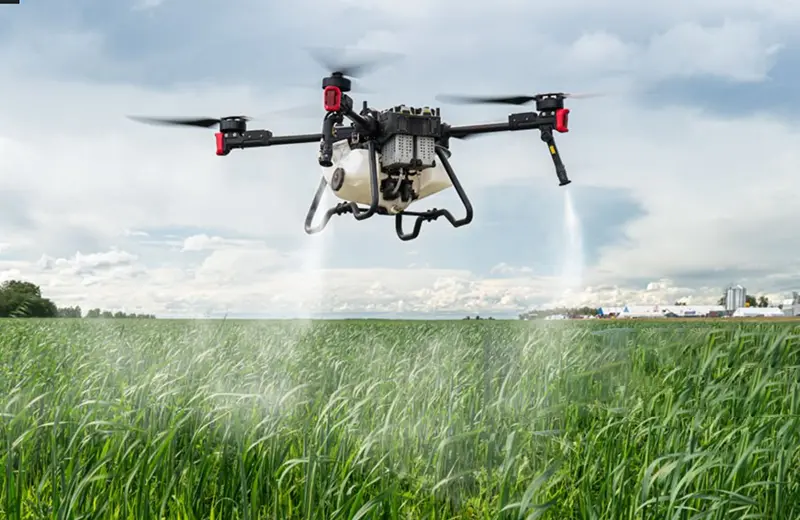
Multispectral payloads and AI analytics enable early diagnosis of pests and diseases with up to 98% accuracy. Variable spraying reduces pesticide use by roughly 30%, while a 50Ah battery and corrosion‑resistant tank allow a single flight to cover 200+ mu (≈16 acres). At scale, farms typically see 20–30% lower operating costs.
Combining LiDAR with oblique photogrammetry delivers 0.05‑m 3D mapping, making modeling about 5× faster and reducing cost by 60%. With GDPR‑compliant encrypted transmission and 5G for real‑time cloud analytics, our data underpins urban planning and digital‑twin programs, boosting planning efficiency by around 300% in typical projects.
The platform provides autonomous routes, fleet scheduling, mission orchestration and an edge‑to‑cloud pipeline. Open APIs and message buses integrate seamlessly with enterprise systems to build a secure, observable low‑altitude network.
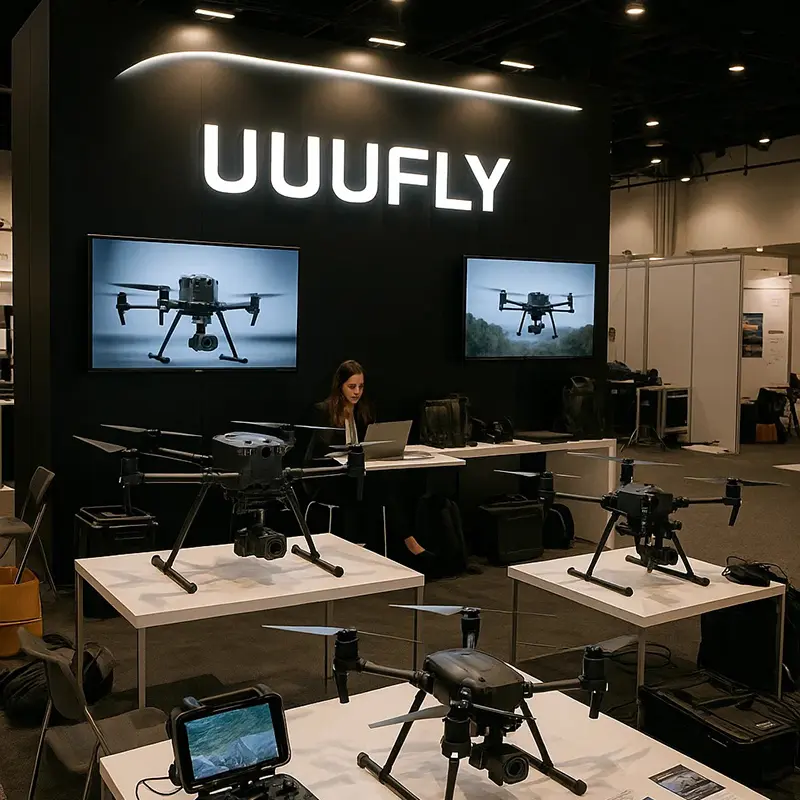
500k+ components, 300+ enterprise clients, active deployment in 30+ global metropolitan zones.
Full compliance with CE / FCC / RoHS environmental and safety standards.
End-to-end hardware-level AES-256 transmission encryption with advanced frequency-hopping anti-jamming arrays.
Full support for localized on-premises private server environments or certified regional cloud setups.
Tailoring unmanned logistics solutions to challenging topographies and highly regulated operational environments.
In remote and mountainous areas, transporting blood, vaccines, and emergency therapeutics via traditional vehicles is slow and unreliable. Our custom delivery drones are equipped with thermally regulated, shock-resistant payload bays.
By establishing high-speed aerial pipelines, hospitals and local clinics can request critical supplies on-demand, reducing transit times from hours to minutes while maintaining strict temperature controls.
Maritime shipping hubs and offshore oil platforms face high costs for simple parts deliveries. Operating helicopters is expensive, and water vessels are subject to ocean swells.
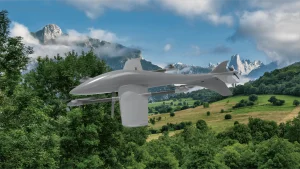
Our heavy-duty multirotor and eVTOL platforms, featuring IP67 ingress protection and sea-spray resistant components, allow operators to run automated ship-to-shore flights. This reduces operational costs per flight by up to 80% compared to manned alternatives.
Deep valleys and winding roads make land delivery in mountainous regions inefficient. By designing high-altitude delivery drones with carbon-fiber construction and customized high-lift propellers, we enable logistics agencies to transport consumer goods directly to mountain communities.
These systems integrate with autonomous landing pads that allow packages to be dropped off without manual pilot intervention.
We combine aerospace engineering, embedded systems, computer vision, and large‑scale operations to build a dependable low-altitude economy.
Former industrial UAV product lead; drives product architecture, standardization, and ecosystem partnerships.
Computer vision & autonomy specialist focusing on sensor fusion, target detection, and mission decision systems.
Drives localization and partner-led delivery across the Middle East, Pakistan, and Russia.
Aerospace & electrical engineer focusing on payload integration, EMC/EMI shielding, and reliability design.
Leads neural network model training and mission orchestration to optimize detection accuracy and flight decisions.
Drives global localization strategies and partner‑led sales networks across LATAM & MENA regions.
To become the core infrastructure provider for the global low‑altitude economy. We will keep integrating 5G, AI, and hydrogen energy to drive standardized, intelligent, and green aerial operations.
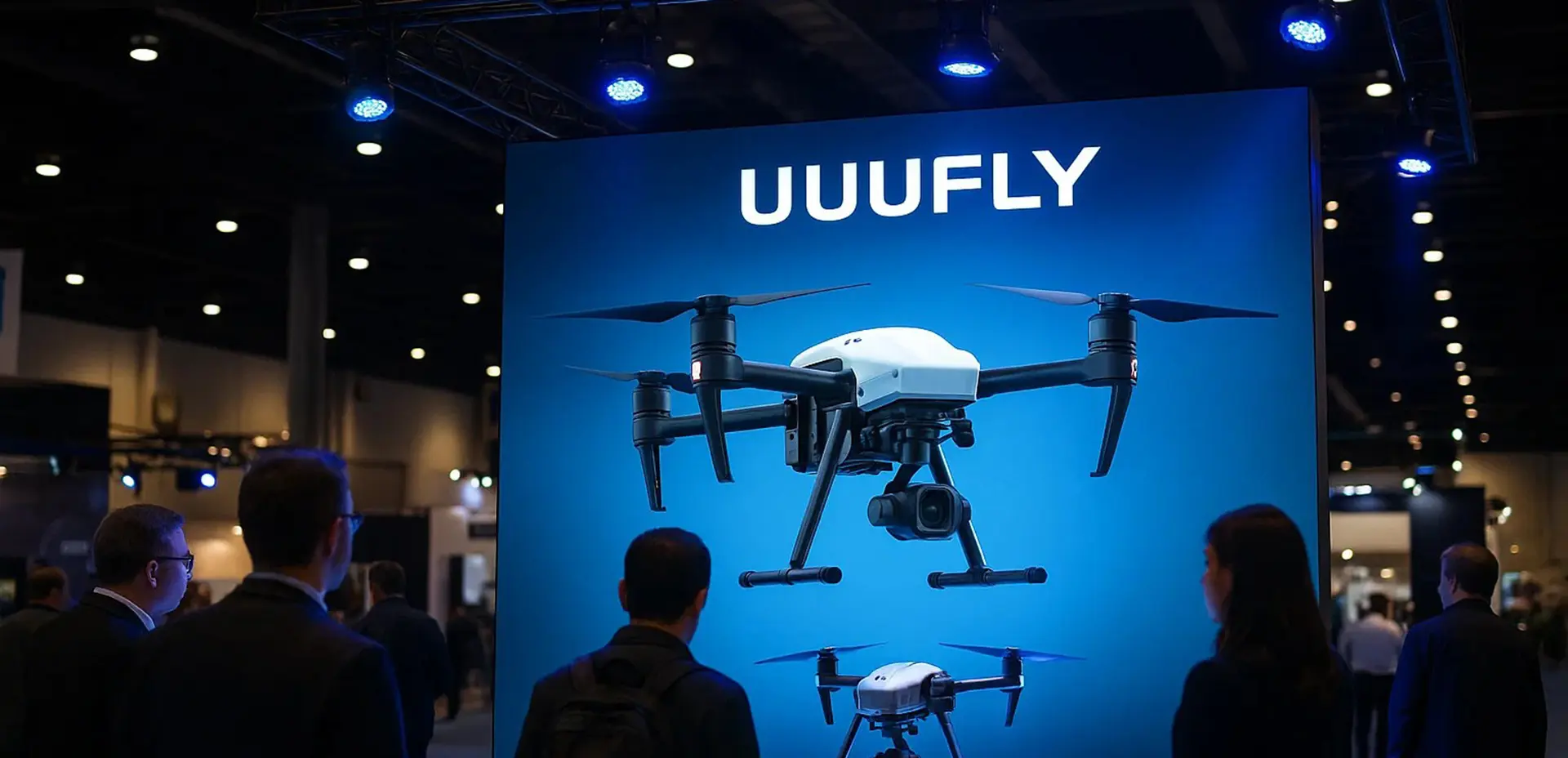


A reference guide for enterprise procurement officers evaluating custom multirotor and eVTOL architectures.
When selecting an OEM partner for industrial cargo delivery operations, procurement managers must evaluate several technical criteria beyond simple maximum payload capability. These operational limits determine the system's total cost of ownership (TCO) and return on investment (ROI):
Expert answers to key technical, operational, and regulatory questions about custom delivery drones.
We use high-modulus, aerospace-grade carbon-fiber composites (such as Toray T700) combined with CNC-machined 7075 aluminum connectors. This construction ensures high structural stiffness, resistance to vibration fatigue, and an optimized strength-to-weight ratio.
Our custom airframes feature an IP67 rating for dust and water resistance, enabling operations in moderate rain and snow. The propulsion systems are calibrated to resist sustained wind speeds of up to 12 m/s (approx. 24 knots) and gusts up to 15 m/s, maintaining flight stability through real-time motor adjustments.
We offer three main payload configurations: 1) Secure, temperature-controlled internal cargo bays with automated door locks. 2) Autonomous winch-and-cable system for lowering cargo from a hover. 3) Mechanical quick-release clamps for agricultural, industrial, or bulk delivery requirements.
All telemetry and control data streams are encrypted using hardware-accelerated AES-256 protocols. The system utilizes FHSS (Frequency Hopping Spread Spectrum) alongside redundant LTE/5G links, preventing unauthorized signal hijacking or jamming in urban radio environments.
Yes. Our flight controllers integrate dual-redundant IMUs with optical flow sensors, radar, and visual SLAM algorithms. This allows the drone to hover steadily and navigate away from obstacles even during GPS dropouts or under magnetic interference.
Flight time depends on the payload. For example, our 30kg class heavy-lift electric quadcopters can carry a 15kg load for up to 35 minutes, or hover with a 30kg load for approximately 20 minutes using high-capacity semi-solid-state battery arrays.
Yes, our software platform features open REST APIs and WebSockets. This allows developers to integrate drone telemetry, battery health metrics, and automated scheduling controls directly into proprietary ERP and logistics dispatch software.
Our factories operate under ISO 9001 quality management guidelines. Each drone is assigned a unique serial number linked to its assembly records, component batch IDs, and testing logs, providing complete traceability from raw materials to final test flight.
Discover our full product range, featuring specialized multirotors, long-endurance eVTOLs, and smart docking kits.
 UUUFLY