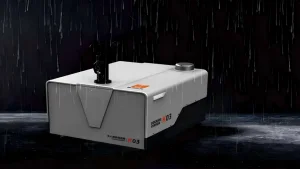
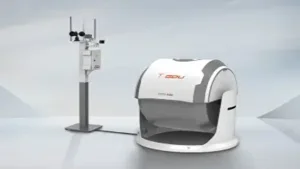
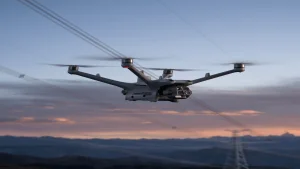
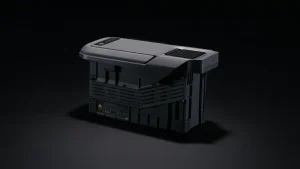
Explore our premium factory-direct heavy cargo platforms, autonomous ground stations, and critical power accessories configured to industrial safety standards.
The global low-altitude airspace economy is undergoing a massive structural shift. Heavy-lift drones are no longer conceptual prototypes; they are primary operational infrastructure. Across diverse industries such as maritime logistics, infrastructure inspection, automated disaster relief, and remote field support, procurement managers face stringent requirements for multi-redundant propulsion systems, battery cycle longevity, and secure communication uplinks.
Procuring directly from a factory-certified manufacturer guarantees access to deep hardware configurations, customized component design, and dedicated firmware optimizations. Large enterprise clients require transparent engineering benchmarks, such as verified wind resistance levels, electromagnetic compatibility (EMC/EMI) compliance, and scalable integration protocols with existing enterprise resource planning (ERP) platforms.
What global procurement teams and industrial buyers look for in wholesale heavy-lift platforms:
1. Maximum Effective Payload: Capacity targeting 30kg, 50kg, and up to the 70kg-class (coaxial setup) to sustain specialized mechanical, agricultural, or sensor structures.
2. Unified SDK Control: Compatibility with Onboard SDKs and Mobile SDKs for proprietary navigation pathing and edge-computed automation.
3. Comprehensive Hardware Hardening: Minimum ingress protection ratings of IP67 or IP55 to allow safe recovery under continuous rainfall or desert dust storms.
4. Dual-Spectrum Integration: Coaligned visual and thermal sensor arrays to maximize the efficiency of industrial utility asset audits.
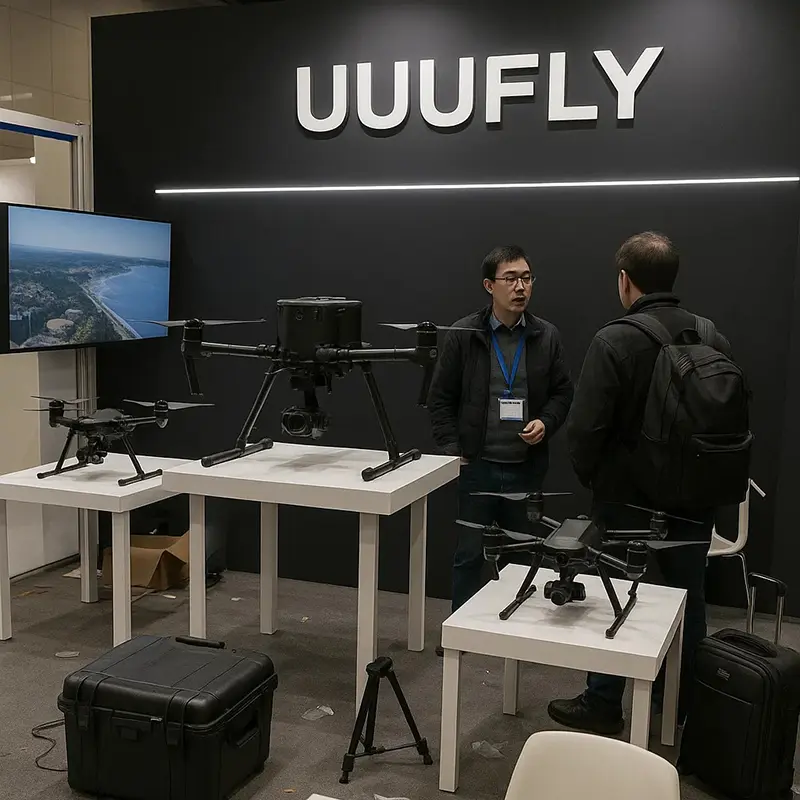
We turn drones from tools into infrastructure, enabling the global low‑altitude economy with engineering rigor and compliance.
UUUFLY builds repeatable, traceable, and compliant UAV systems through integrated innovation across hardware, algorithms, and data operations. We close the loop of Discover → Decide → Execute → Trace for power, agriculture, and smart‑city customers, delivering measurable aerial productivity at scale.
Our core engineering capabilities include dual‑spectrum defect detection (specifically optimized for high-voltage power transmission inspection), multispectral sensing & variable spraying (precision agriculture mapping), 0.05‑m 3D mapping (smart city digital twins), autonomous routes & fleet scheduling (scaled unmanned operations), and an end‑to‑end edge‑to‑cloud data pipeline to guarantee ultimate governance & regulatory compliance.
Designed and built for critical deployment sectors where uptime, precision, and reliable payload dynamics are non-negotiable.
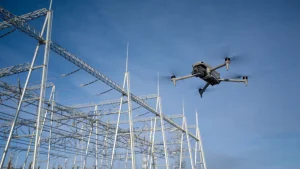
With millimeter‑level positioning and encrypted video links, combined with dual‑spectrum defect detection and AI target recognition, defect discovery efficiency improves by about 40%. Autonomous patrols and emergency response remain reliable in complex environments. The fast‑charge system is compatible with mainstream fleets (80% in 30 minutes), and carbon‑fiber propellers with IP67 motors cover most models. In multiple grid pilots, defect detection reached 99.7%.
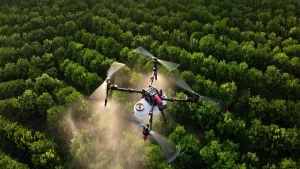
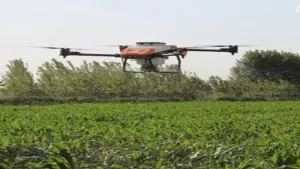
Multispectral payloads and AI analytics enable early diagnosis of pests and diseases (about 98% accuracy). Variable spraying reduces pesticide use by roughly 30%, while a 50Ah battery and corrosion‑resistant tank allow a single flight to cover 200+ mu (≈16 acres). At scale, farms typically see 20–30% lower operating costs when integrated with heavy payload dispersal drone fleets.
Combining LiDAR with oblique photogrammetry delivers 0.05‑m 3D mapping, making modeling about 5× faster and reducing cost by 60%. With GDPR‑compliant encrypted transmission and 5G for real‑time cloud analytics, our data underpins urban planning and digital‑twin programs, boosting planning efficiency by around 300% in typical projects.
The platform provides autonomous routes, fleet scheduling, mission orchestration, and an edge‑to‑cloud data pipeline. Open APIs and message buses integrate seamlessly with enterprise systems to build a secure, observable low‑altitude network. Operators can execute BVLOS (Beyond Visual Line of Sight) tasks confidently with integrated real-time latency feedback loops.
Providing specialized airborne structures and electronic hardware setups to meet international safety and operating demands.

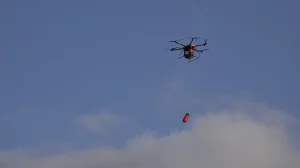
Heavy payload capacity is critical for deploying high-output searchlight systems, dual-thermal cameras, and physical survival drops in disaster situations.
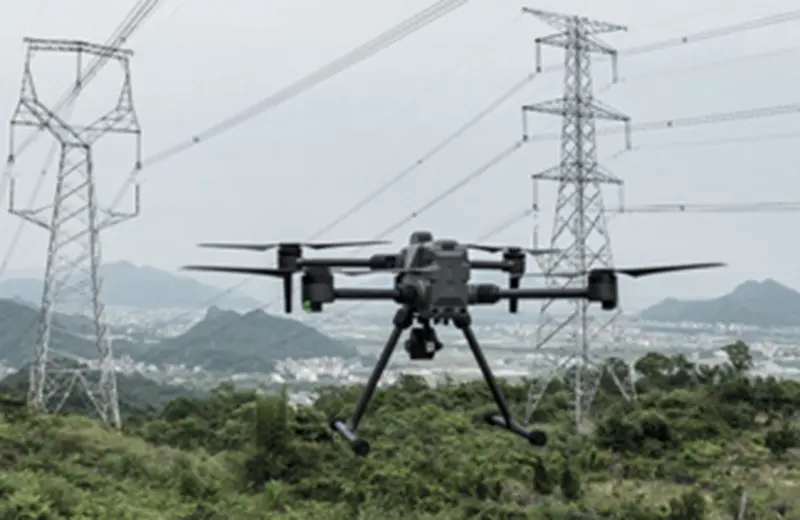
Equipped with millimeter-wave radar and RTK centimeter positioning, enabling safe power corridor maintenance without human exposure to live electrical fields.

Designed to carry high-end geodetic LiDAR payloads, maintaining balance under sustained wind gusts to ensure absolute data fidelity.
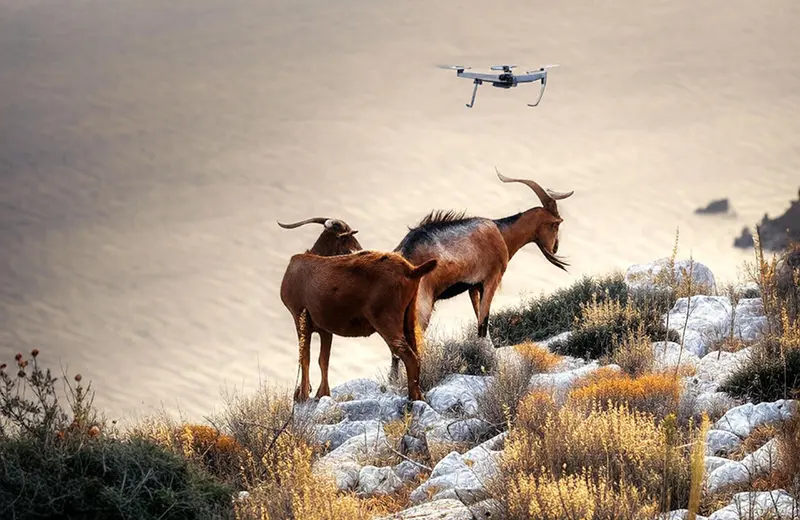
Long-endurance platforms carrying multispectral and thermal sensors configured to monitor migrating populations and map protected forest boundaries.
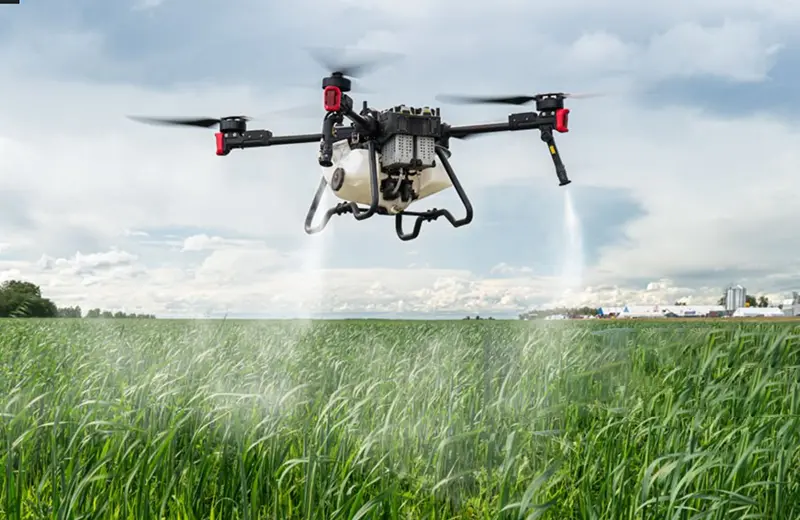
Featuring corrosion-resistant fluid delivery systems and intelligent radar to traverse crop canopies smoothly under dense load profiles.
Do you have a unique payload requirement? Our internal R&D department can customize structural mounts, battery positioning, telemetry integrations, and SDK libraries to meet custom payload specifications.
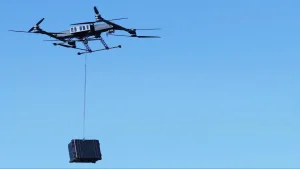
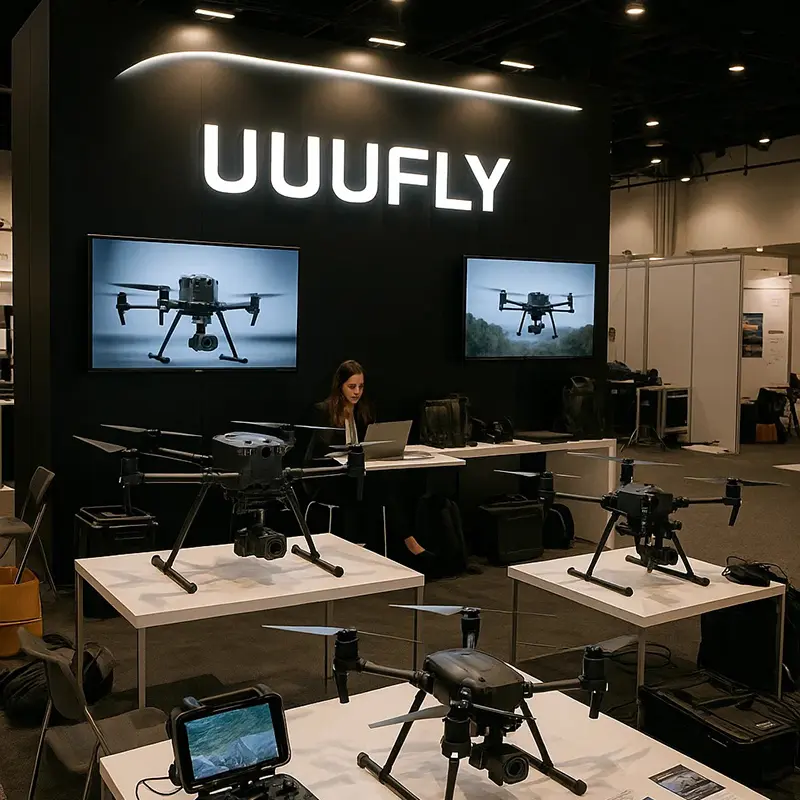
Deploying industrial sensors, dynamic cargo boxes, or water dispersal systems is straightforward with UUUFLY’s modular carbon-fiber interface.
We approach unmanned flight with zero compromise on engineering safety, cybersecurity, and physical material selection.
A look into the structural, energetic, and algorithmic milestones driving our industrial drone engineering.
To break current flight limits of lithium-polymer battery cells under heavy payload, our R&D team is advancing solid-state battery integrations alongside high-density hydrogen fuel cells. The ultimate target is sustaining a 30kg load configuration for up to 90 minutes of continuous operation.
Transitioning from one-operator-one-aircraft to fully decentralized swarm operations. Through 5G data transmission and local edge computing, multiple heavy-lift drones can distribute mapping, search, or cargo transport missions dynamically with zero centralized server latency.
Our upcoming platform architectures include dual-IMU, triple-magnetometer, and multi-GNSS constellation redundancy arrays. In the event of primary autopilot interference or actuator failure, fallback routines take control in milliseconds to secure payload retrieval.
Combining decades of aerospace engineering, computer vision expertise, and international enterprise business operations.
Operating high-capacity payload unmanned aerial systems within global airspace demands absolute adherence to local flight regulations and data safety protocols. UUUFLY is engineered from the ground up to support modern compliance requirements across diverse national jurisdictions.
Expert answers addressing the primary technical, logistical, and operational questions from enterprise buyers.
The KEEL PRO (70kg Class Coaxial Quadcopter) is optimized to sustain major payloads with high operational stability. With a standard payload configuration of 30kg, flight time averages 25 to 35 minutes depending on battery temperature and aerodynamic variables. The KEEL MAX features custom modularity to optimize payload-to-battery weight ratios, ensuring you don't over-burden the electrical propulsion system.
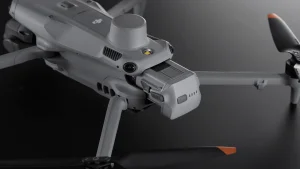
Yes, our industrial platforms (including custom assemblies and DJI Matrice integrations) include dual-antenna RTK receiver setups. This provides centimeter-level accuracy for 3D mapping, high-voltage power line patrol, and automated docking precision, even in high electromagnetic interference environments.
We utilize AES-256 standard encryption for all transmission signals (control link, video downlink, and telemetry). In addition, customers can request on-premise cloud server installations, ensuring that flight paths, coordinates, and dual-spectrum imagery never leave their corporate network perimeter.
Standard off-the-shelf inventory (such as flight batteries and standard receiver parts) ships within 5-10 business days. For customized heavy-lift drone setups, modular modifications, and large fleet orders, development and production times range between 30 to 60 days, incorporating full factory testing protocols (EMC/EMI, thermal testing, stress flights).
Yes, our platforms utilize open API endpoints and standard payload/telemetry interfaces. You can easily integrate flight operations with QGroundControl, custom enterprise fleet management platforms, and proprietary API networks.
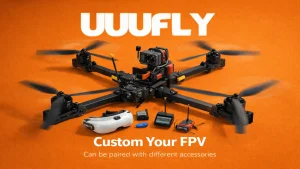
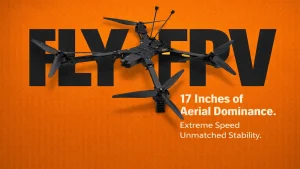
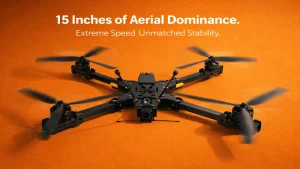
Expand your aerial capabilities with industrial sprayer platforms, high-performance batteries, and specialized tactical FPV solutions.
 UUUFLY