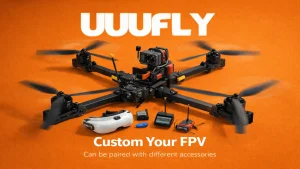
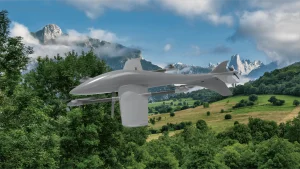
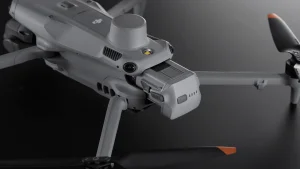
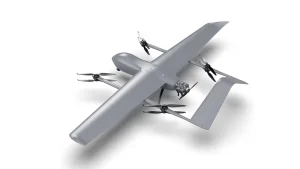
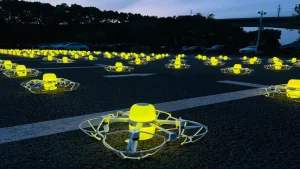
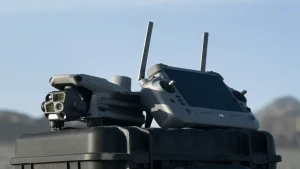
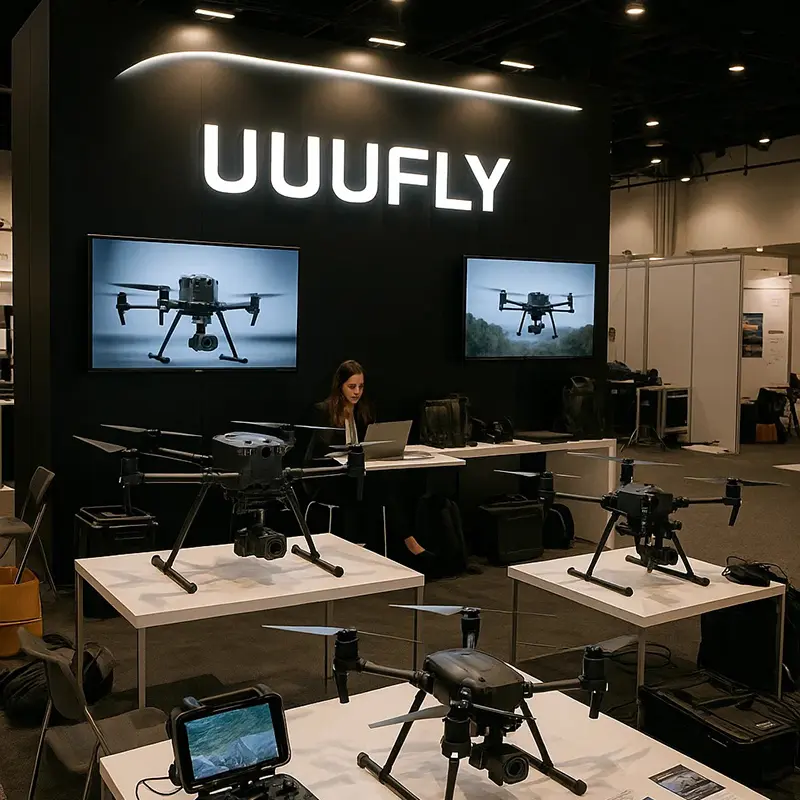
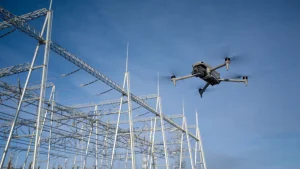
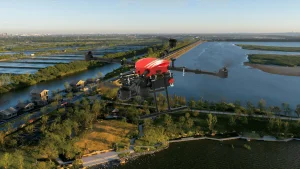
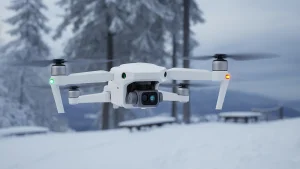
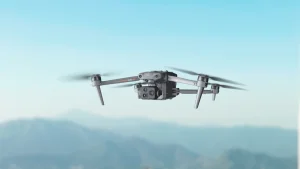
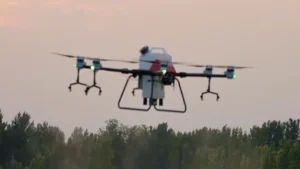
Explore our premium product portfolio designed for high efficiency, dual-spectrum performance, and robust payload control in commercial applications.
We turn drones from tools into infrastructure, enabling the global low‑altitude economy with engineering rigor and compliance.
UUUFLY builds repeatable, traceable and compliant UAV systems through integrated innovation across hardware, algorithms and data operations. We close the loop of Discover → Decide → Execute → Trace for power, agriculture and smart‑city customers, delivering measurable aerial productivity at scale.
Our core capabilities focus heavily on dual‑spectrum defect detection (for power inspection grids), multispectral sensing & variable spraying (tailored for precision agriculture), 0.05‑m 3D mapping (for smart city engineering), autonomous routes & fleet scheduling (scaled operations), and a secure, end‑to‑end edge‑to‑cloud data pipeline (for strict governance & compliance).
Understanding the supply chain advantages and strategic value of sourcing directly from leading UAV factories.
In the modern agricultural and industrial landscape, drone adoption has shifted from experimental pilots to core operational infrastructure. Sourcing from a reliable Ag Drone Manufacturer & Factory in China offers unmatched competitive advantages that span research and development speed, material quality, and full supply-chain integration.
The concentration of UAV manufacturing clusters in regions like Shenzhen and Guangdong enables rapid iteration. From high-modulus carbon-fiber frames to advanced brushless motors, ESCs (Electronic Speed Controllers), and micro-LiDAR modules, every component is developed and tested within a unified ecosystem. This spatial proximity reduces manufacturing lead times by up to 60% compared to Western assembly plants, passing direct cost savings to the buyer.
Ag drones operate in highly corrosive environments filled with chemical fertilizers, pesticides, and extreme moisture. Modern Chinese factories leverage high-efficiency carbon-fiber composite layups and IP67-rated chemical sealing for key frame components. By choosing custom carbon-fiber crop protection models, operators secure structural rigidity at a fraction of the weight, maximizing payload capacity and battery efficiency.
World-class factories utilize advanced chambers to perform rigorous electromagnetic compatibility (EMC) and electromagnetic interference (EMI) tests. This ensures that GPS receivers, RTK positioners, and high-frequency video links operate without signal dropouts, even when flying near high-voltage transmission lines or industrial telecom towers.
We deliver specialized engineering capabilities across four critical industrial domains.
Equipped with millimeter‑level RTK positioning and AES-256 encrypted video links. Dual‑spectrum defect detection combined with AI target recognition improves defect discovery efficiency by approximately 40%. The fast‑charge system charges up to 80% in 30 minutes, supported by carbon‑fiber propellers and IP67 motors. In multiple power grid pilots, our target defect detection rate reached 99.7%.
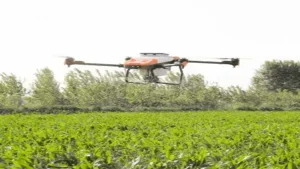
Multispectral payloads and cloud-based AI analytics enable early pest and plant disease identification at a 98% accuracy rate. Implementing variable rate spraying patterns reduces chemical runoff and pesticide waste by roughly 30%. Driven by high-capacity 50Ah smart batteries, a single flight mission covers 200+ mu (~16 acres), resulting in a 20-30% drop in overall farm operational costs.
Integrating high-precision LiDAR sensors with oblique photogrammetry achieves 0.05-m 3D mapping precision. Real-world modeling is up to 5x faster, lowering data collection costs by 60%. Utilizing GDPR-compliant encrypted transmission protocols and 5G networks, data flows seamlessly into digital-twin engines, boosting municipal planning efficiency by 300%.
Our comprehensive cloud platform delivers automated flight route generation, fleet scheduling, mission orchestration, and an integrated edge-to-cloud data stream. Standardized open APIs and robust message buses guarantee hassle-free integration into existing enterprise resource planning (ERP) systems, scaling low-altitude economic growth securely.
Key technological shifts defining the future of unmanned aerial vehicles (UAVs).
The unmanned aerial system (UAS) industry is undergoing rapid technical evolution. Modern buyers look past simple drone frames; they seek comprehensive, interconnected platforms that utilize smart sensors, heavy payloads, and automated ground infrastructure. Key trends driving the market forward include:
While lithium-polymer (LiPo) and solid-state lithium-ion batteries remain dominant for short-to-medium range flights, heavy-payload spraying operations are increasingly adopting hybrid engines and hydrogen fuel cells. These systems drastically extend flight times, moving from typical 25-minute thresholds to multi-hour operating capacities, making remote forest patrols and vast crop spraying missions highly viable without frequent battery swaps.
Instead of transmitting large volumes of raw thermal and RGB imagery back to a central cloud server, modern enterprise UAVs process data on-board using specialized edge-computing accelerators. Machine learning models identify power line cracks, crop anomalies, or thermal leakages instantly, sending simple alert coordinates to the operator and reducing transmission bandwidth requirements by 90%.
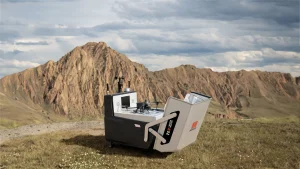
The market is seeing high demand for automated docking solutions, such as the GUD K02. Drone docks protect aircraft from weather, fast-charge them within minutes, and execute predefined autonomous flight plans without human pilots on site. This configuration is crucial for continuous infrastructure surveillance, smart city mapping, and rapid industrial emergency response.
Industrial standards, tested field performance, and cross-border compliance operations.
Combining aerospace engineering, computer vision, and global operations expertise.
How global buyers should navigate OEM/ODM agreements and technical specifications with Chinese factories.
Procuring a fleet of commercial drones or entering a partnership with an agricultural drone manufacturer requires a strict verification process. To ensure the reliability of imported unmanned hardware, procurement managers should prioritize the following parameters:
Because batteries make up a significant portion of operating costs, verifying cell life cycles is critical. Smart batteries, such as DJI Matrice 4 compatible series or custom 50Ah power packs, must carry complete UN38.3 test reports for international air/sea freight logistics. Furthermore, buyers must evaluate the integrated Battery Management System (BMS) to ensure safety during rapid charging cycles.
For precision crop spraying or centimeter-level survey mapping, standard GPS/GLONASS receivers are insufficient. Buyers should check if the manufacturer's RTK modules are compatible with local network RTK (CORS) or support custom ground base stations. Seamless RTK integration ensures flight repeatability within a 0.05-meter margin of error.
A capable factory must provide a robust SDK (Software Development Kit)—specifically Mobile SDK, Payload SDK, and Onboard SDK. This allows corporate clients to build custom flight apps, mount third-party instruments (like multispectral cameras or gas sniffers), and route video streams directly into secure proprietary systems.
Specialized systems engineered to solve challenges across five major industrial areas.

Search and Rescue Drones, Police Drones (UAVs), and custom Firefighting Drones.
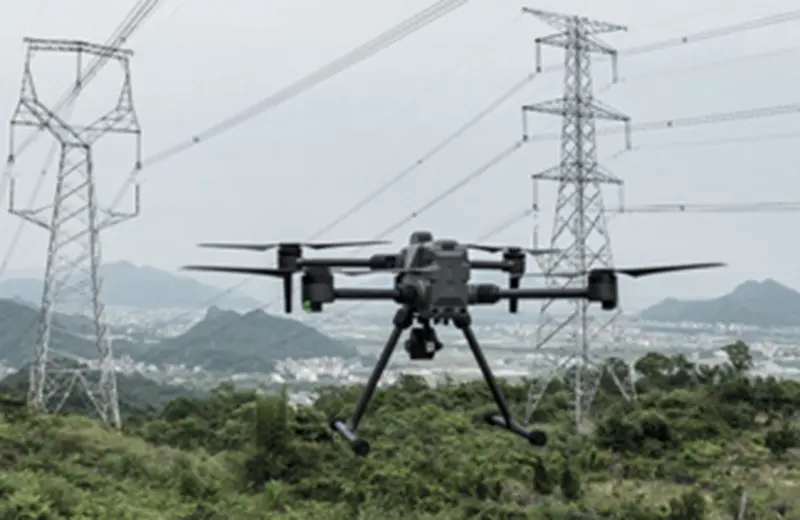
High-voltage Power Line Inspection Drones with dual-spectrum sensors.

High-accuracy Industrial Inspection Drones and Building Inspection Drones.
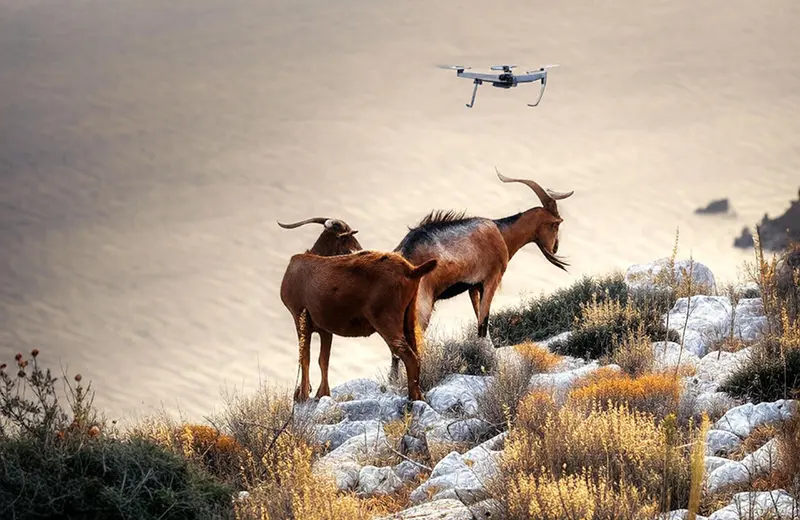
Wildlife Protection Drones designed with silent propulsion systems.
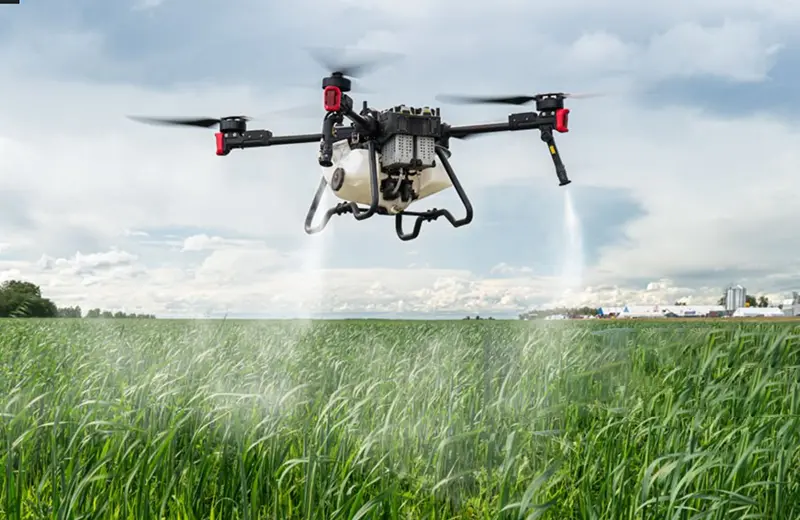
Precision Agriculture UAVs for mapping, variable spraying, and yield assessment.
Expert answers addressing compliance, manufacturing quality, and technical features.
Direct factory sourcing grants access to the world's most integrated UAV component clusters. Buyers benefit from lower manufacturing costs, swift hardware customization (like custom carbon-fiber configurations), rigorous EMC testing, and direct support from engineering teams. This significantly shortens product development and logistics cycles.
Our drones leverage advanced multispectral imaging to generate crop prescription maps. Centimeter-level RTK positioning, combined with high-performance pressure nozzles, allows the aircraft to adjust pump rates dynamically based on flight speed, reducing fertilizer/pesticide waste by up to 30%.
All telemetry, control signals, and video feeds are protected using AES-256 encryption. We respect regional regulations and offer secure on-premise cloud deployments to guarantee that sensitive mapping and infrastructure data remains entirely within your sovereign borders.
Yes. We manufacture premium accessories, including custom smart batteries designed for the DJI Matrice 4 series, as well as specialized payloads compatible with MMC and other standard interfaces. This ensures smooth operations across mixed fleets.
Integrating advanced technology to drive standardized, intelligent, and green aerial operations.
Our long-term commitment goes beyond simple manufacturing. UUUFLY aims to become the core infrastructure provider for the global low-altitude economy. By integrating 5G networks for real-time telemetry, AI edge-computing for automated route decisions, and clean hydrogen fuel systems, we are leading the transition to clean, efficient, and standardized commercial UAV operations.
Explore the second segment of our global product offering. Built for resilience and high endurance under all weather conditions.
 UUUFLY